Vision Zero DC Crash Map
Case study · Policy
Read DC crash trends, map incidents and high-injury corridors, review safety laws and proposed bills, and draft a ward-specific ANC resolution from sourced findings.
- What
- Read DC crash trends, map incidents and high-injury corridors, review safety laws and proposed bills, and draft a ward-specific ANC resolution from sourced findings.
- Stack
- Leaflet over DC's live ArcGIS layer + a baked Python snapshot; Python and Node tests in CI.
- Status
- LIVE
- Dates
- Scope reviewed October 2, 2026; data dates shown in the app
- Links
- Live site · Source code
Background
Where does DC’s crash evidence point to a safety intervention?
Vision Zero DC connects the District’s official collision records to trends, high-injury corridors, countermeasures and public decision-making. It separates observed crash patterns from proposed interventions and unverified bill statuses.
A Look Inside
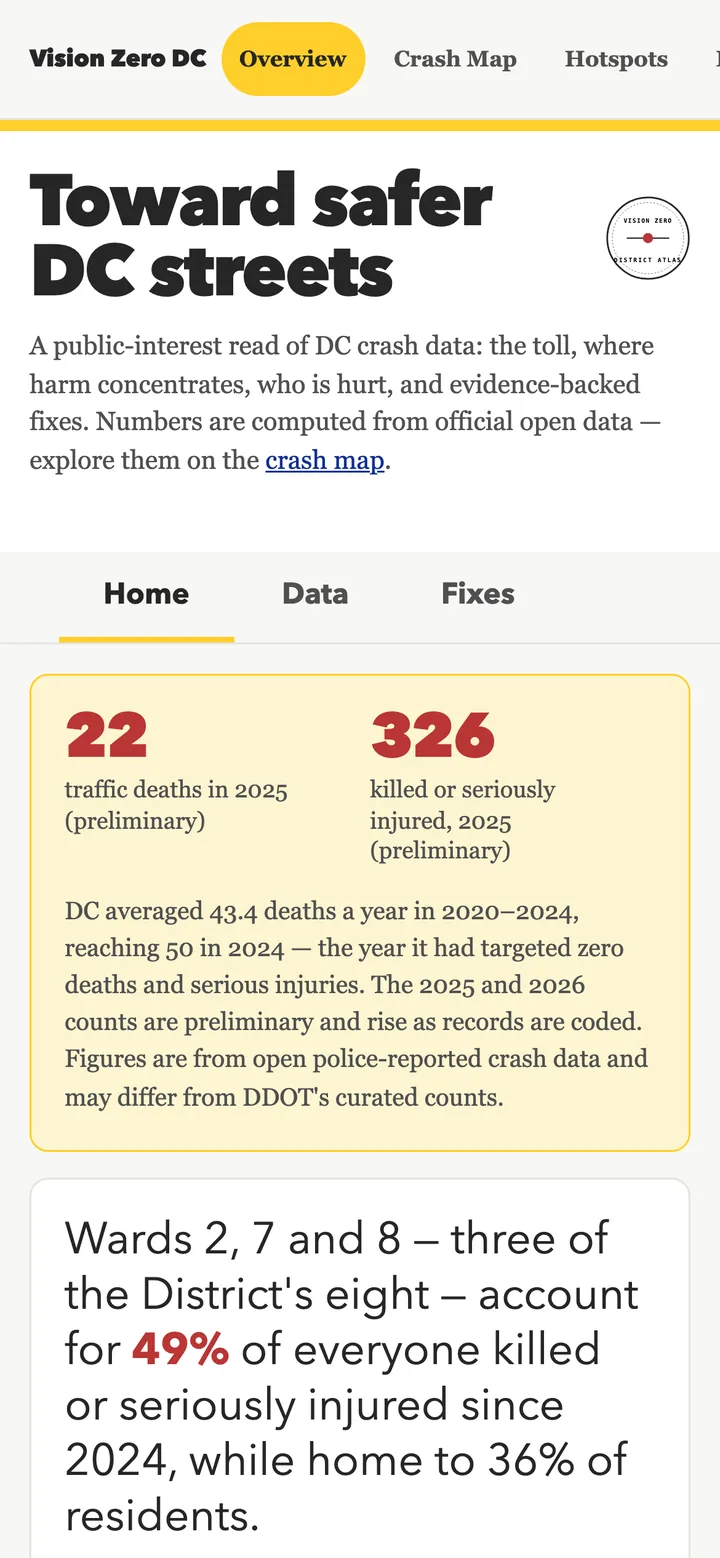
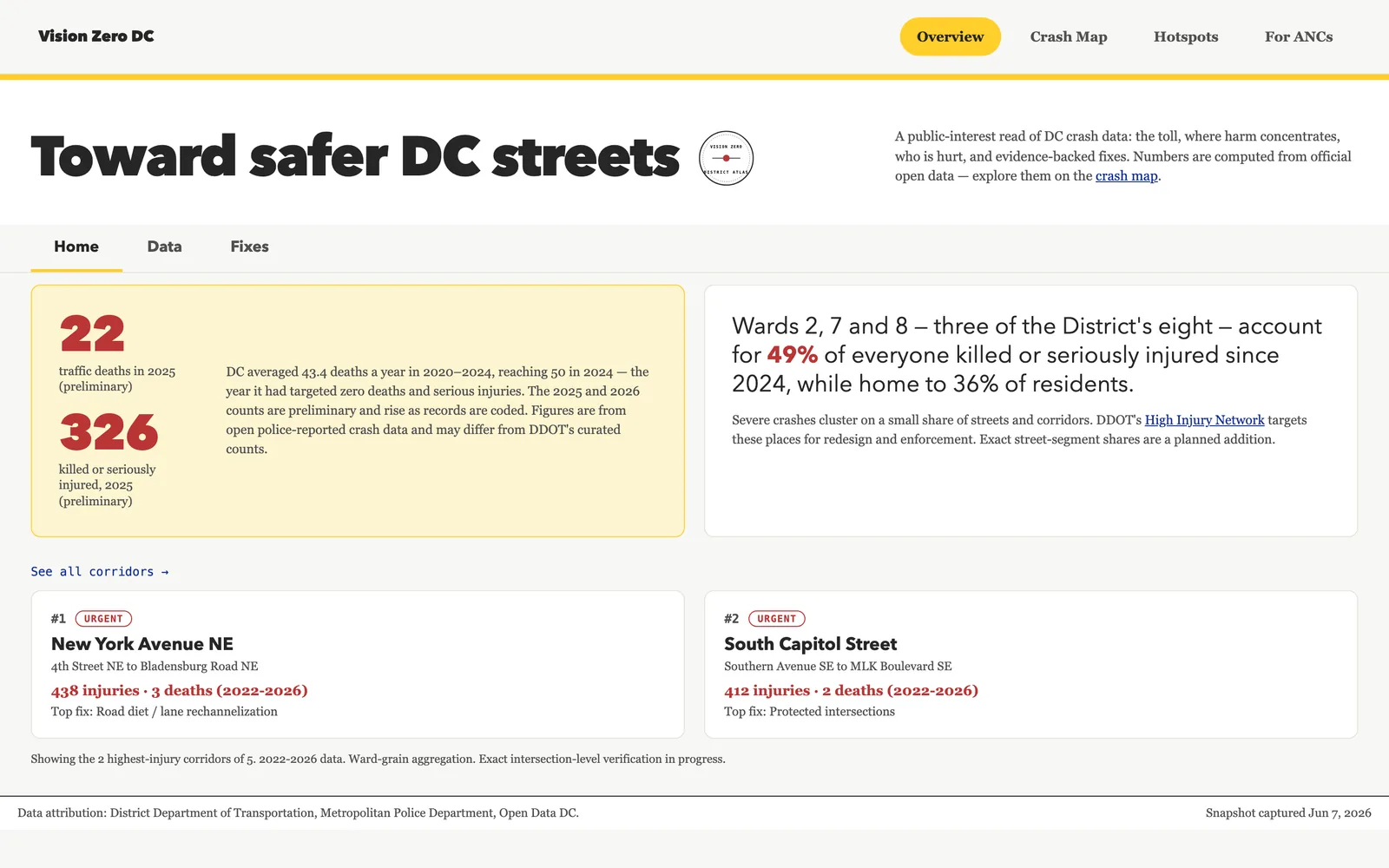
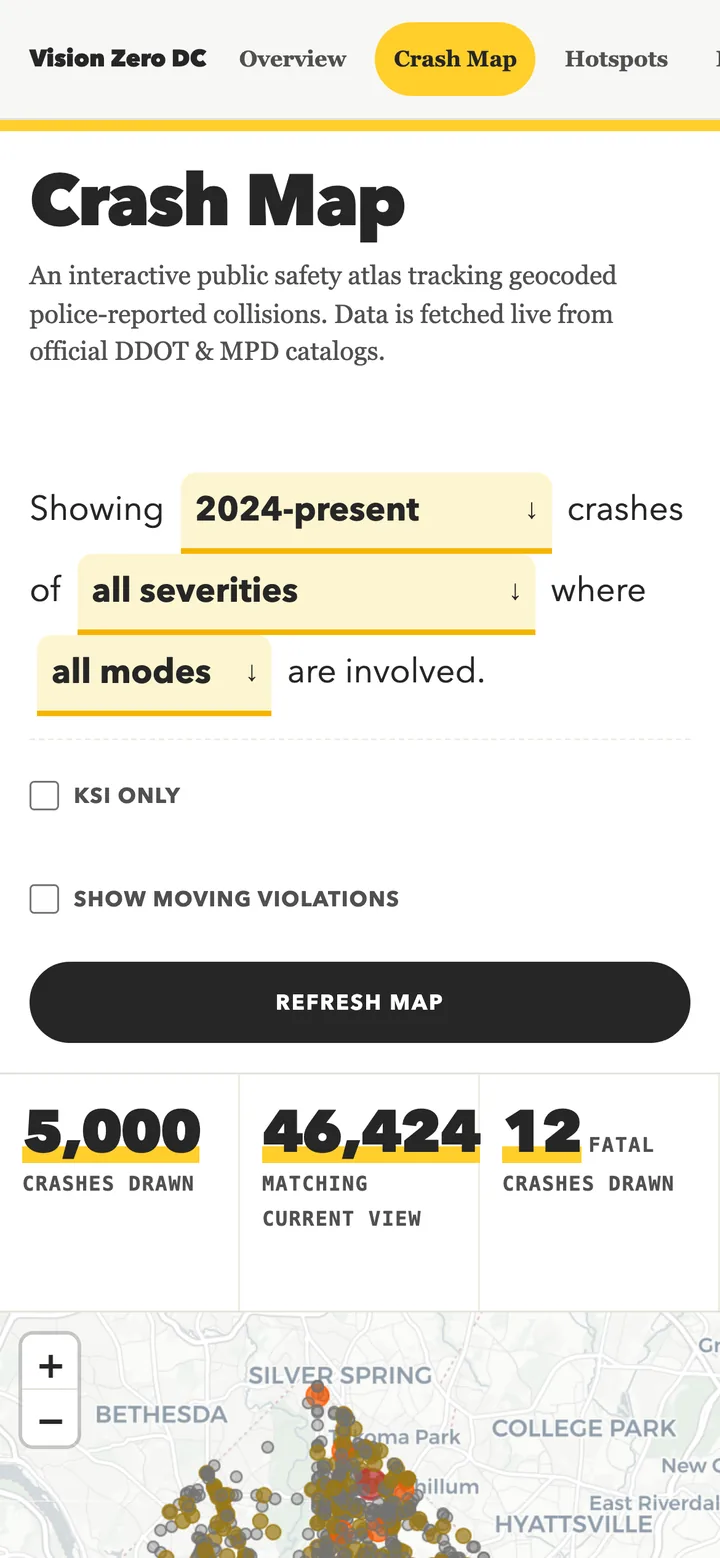
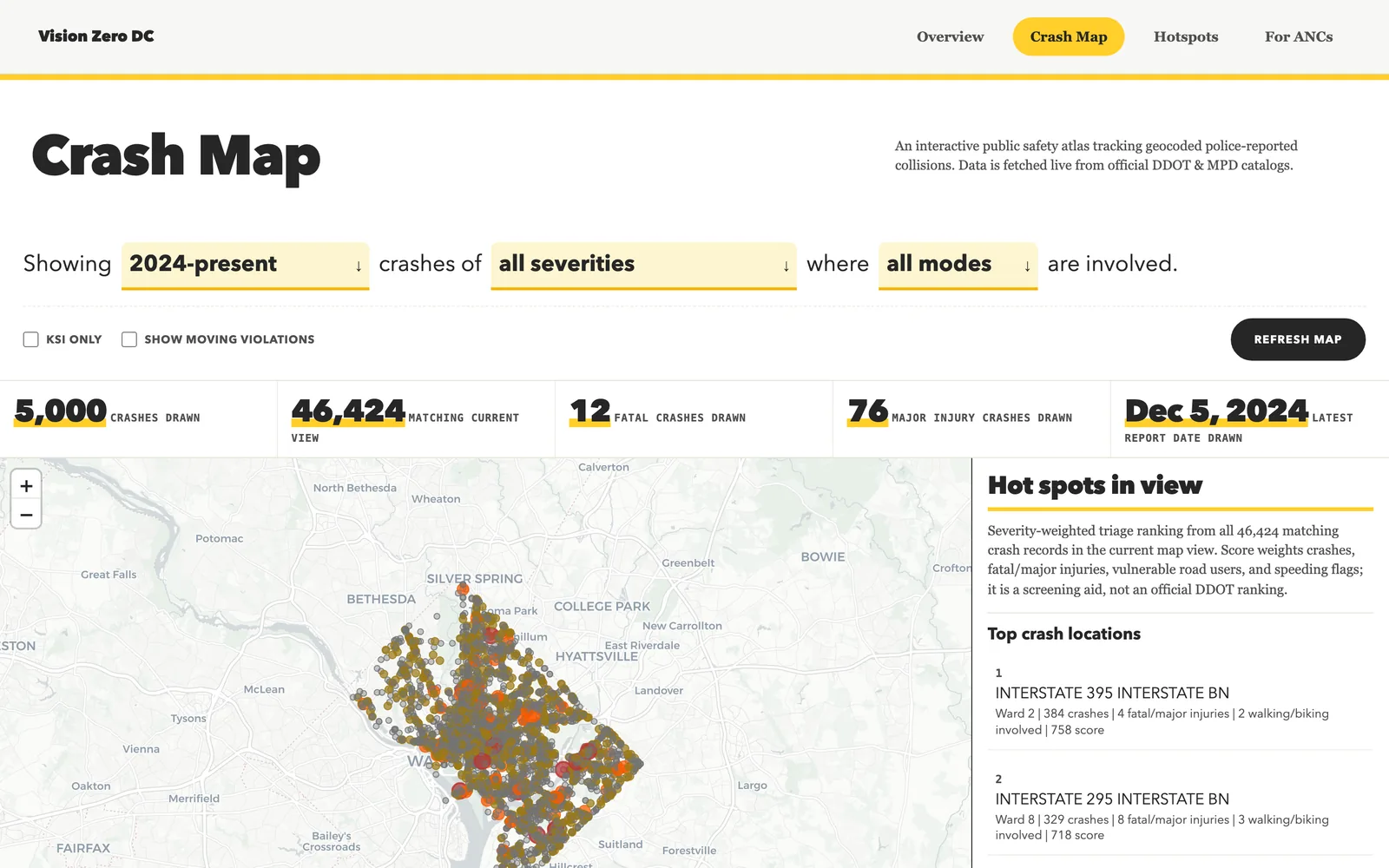
Each view shown on mobile and desktop — tap any image to open the live site.
How It Works
- Overview: Deaths, serious injuries, modes and ward burdens are read from a dated snapshot.
- Map: Live incident queries expose crash case files, filters and moving-violation context.
- Corridors: DDOT’s High Injury Network is joined to crashes; profiles and a sortable corridor table show the underlying measures.
- Law tracker: Enacted laws, pending proposals and implementation pointers retain their different statuses.
- ANC briefs: Ward-scoped findings support editable resolution drafts and links to the officials who can act.
Scope reviewed October 2, 2026 · Project documentation. Source data keeps its published dates.