Data Center Water Usage
Case study · Infrastructure
Track data-center water permits, discharge records, disclosure laws, local actions, company commitments, legal precedents and documented conflicts, with sources for each record.
- What
- Track data-center water permits, discharge records, disclosure laws, local actions, company commitments, legal precedents and documented conflicts, with sources for each record.
- Stack
- Python extraction, SQLite and static-site publishing.
- Status
- LIVE
- Dates
- Scope reviewed October 2, 2026; data dates shown in the app
- Links
- Live site · Source code
Background
Which public records explain how data centers draw, discharge and disclose water?
Cooling-water claims are difficult to compare when a source does not distinguish withdrawals, consumptive loss and discharge. This tracker connects those quantities to the permits, records and policy instruments that can explain them.
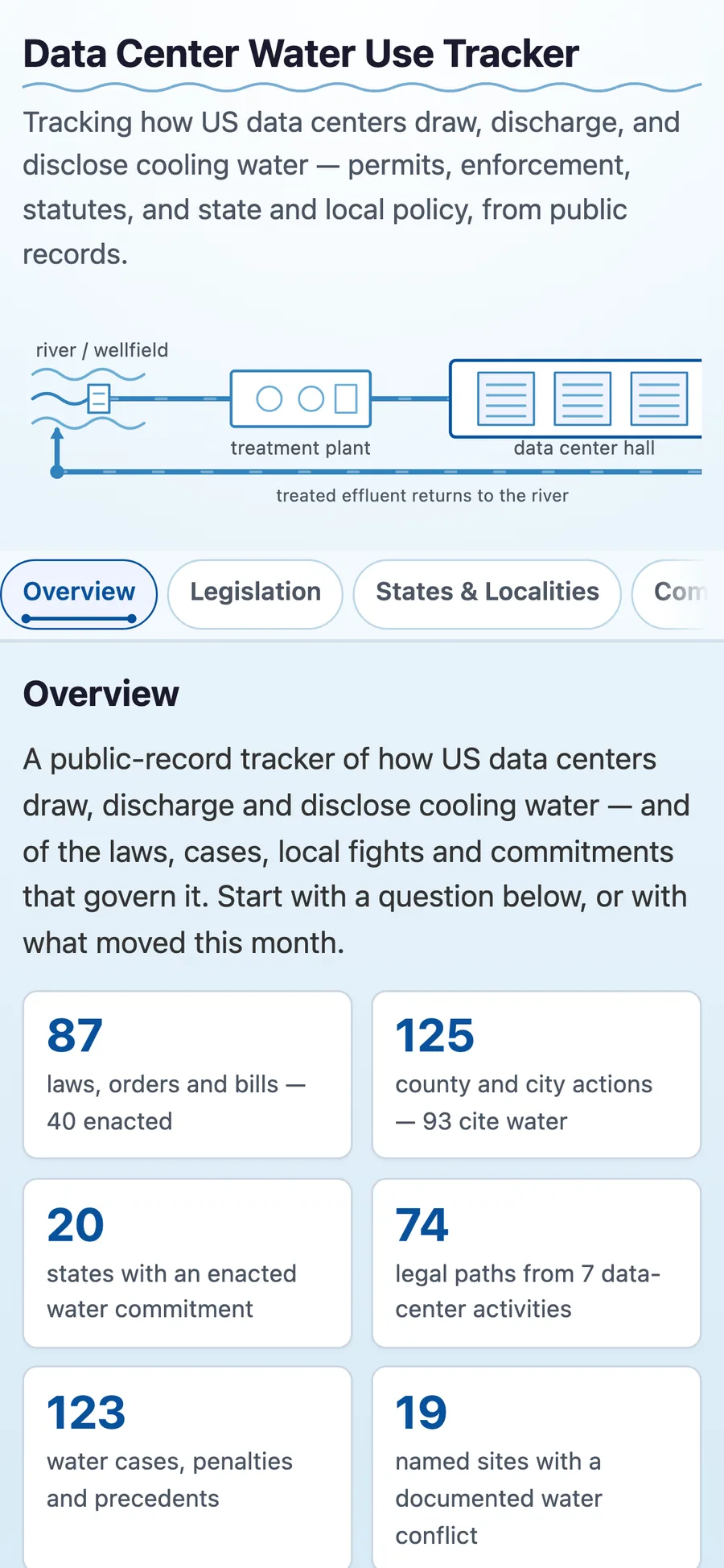
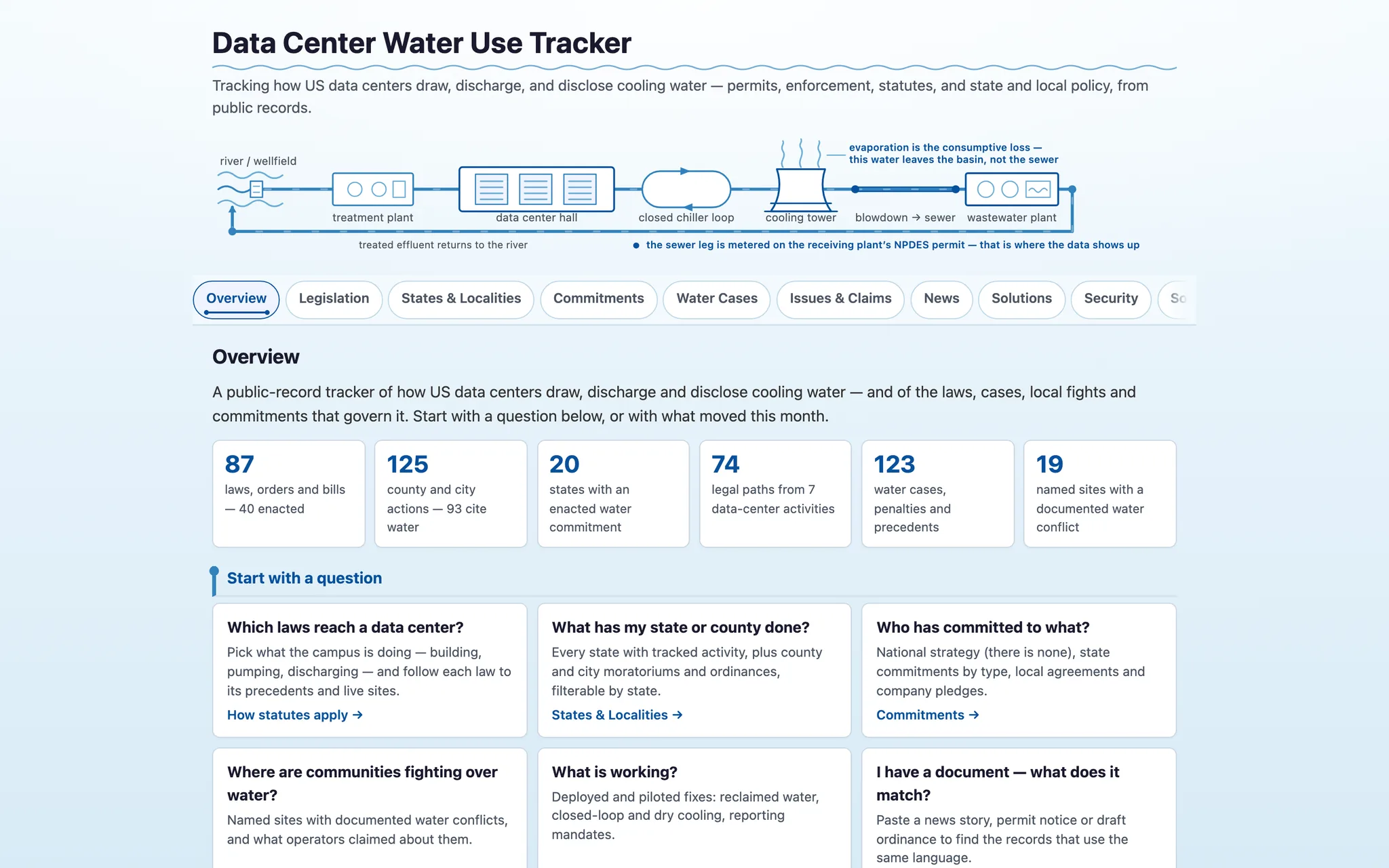
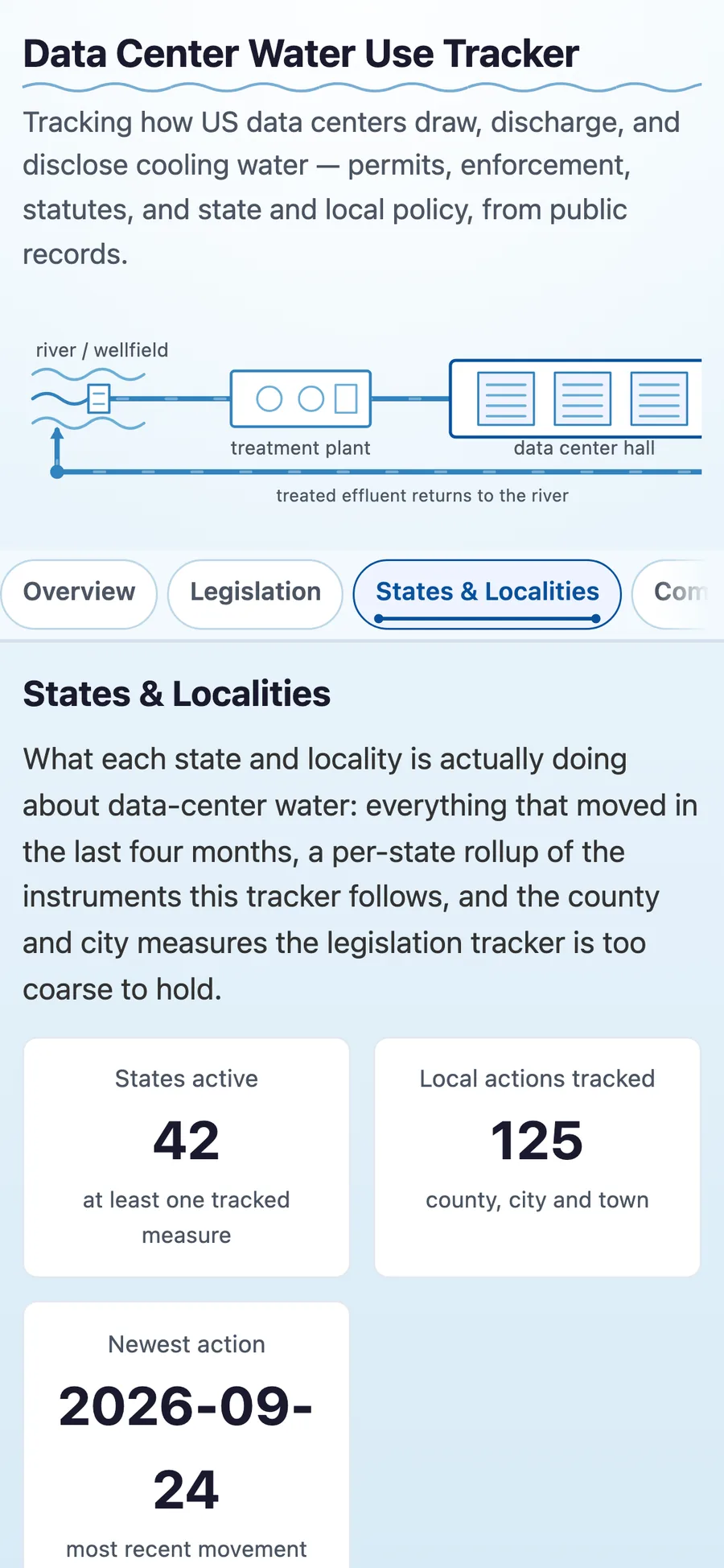
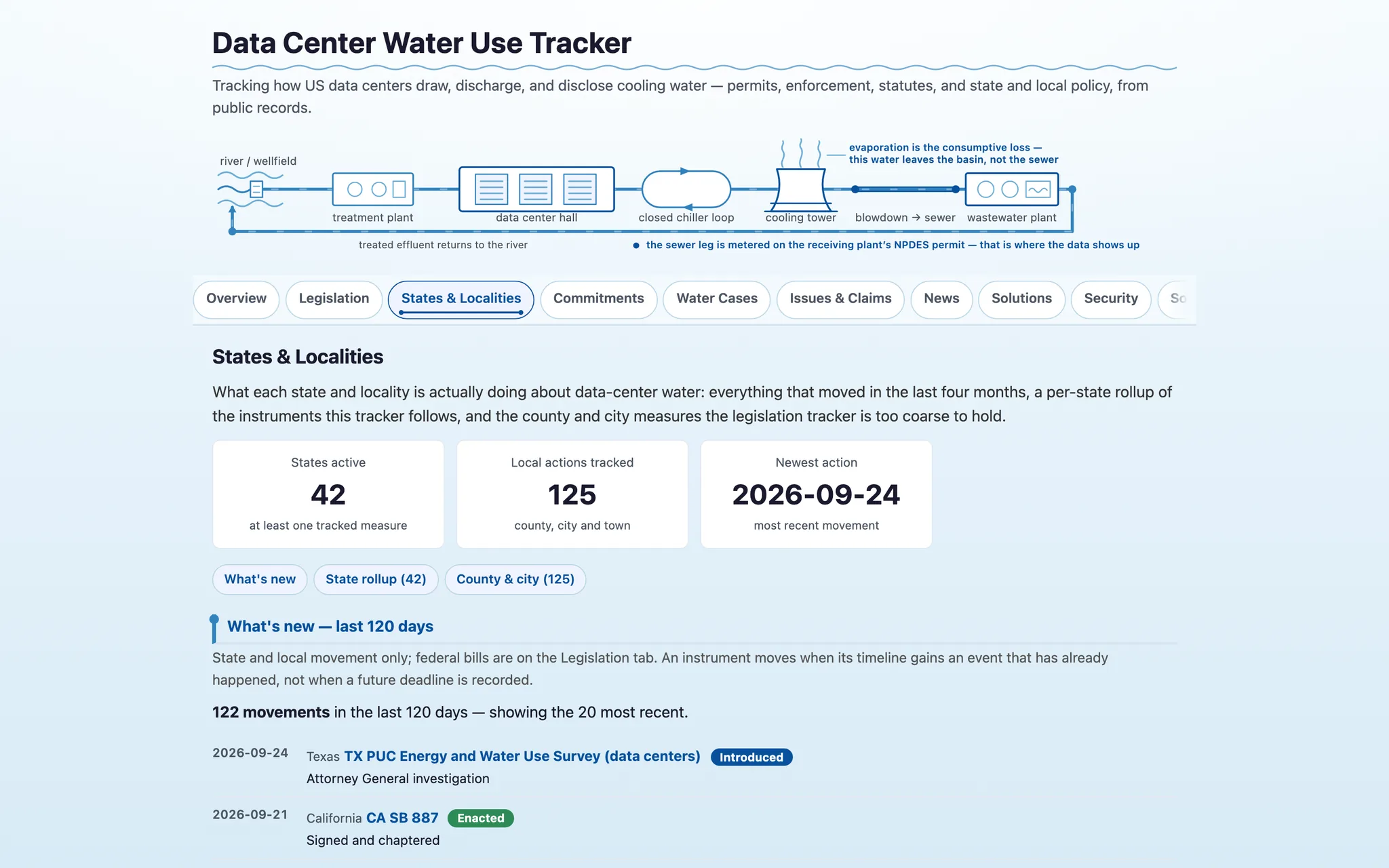
The overview now routes users by question, followed by legislation, state and local actions, commitments, cases, documented conflicts, solutions, source records and document exploration.
A Look Inside
Each view shown on mobile and desktop — tap any image to open the live site.
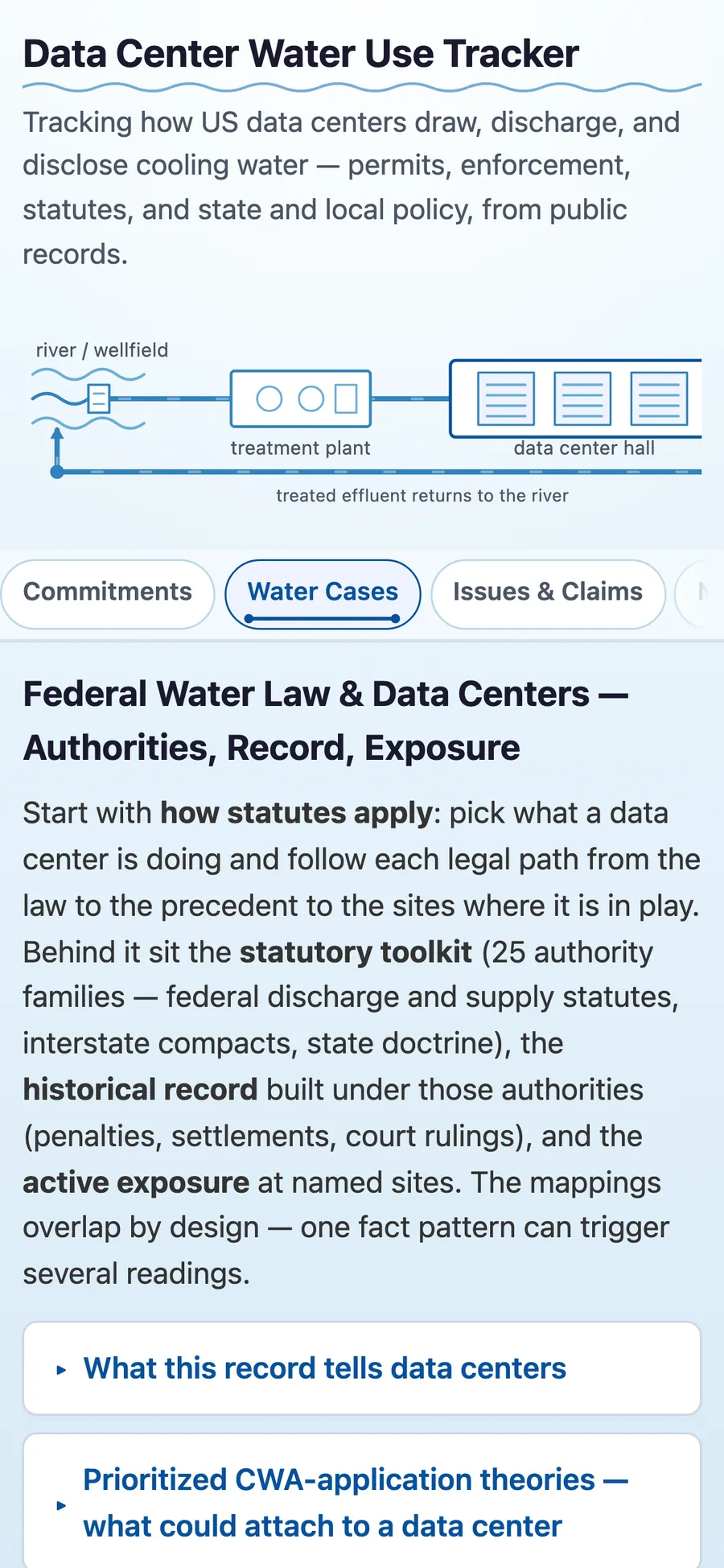
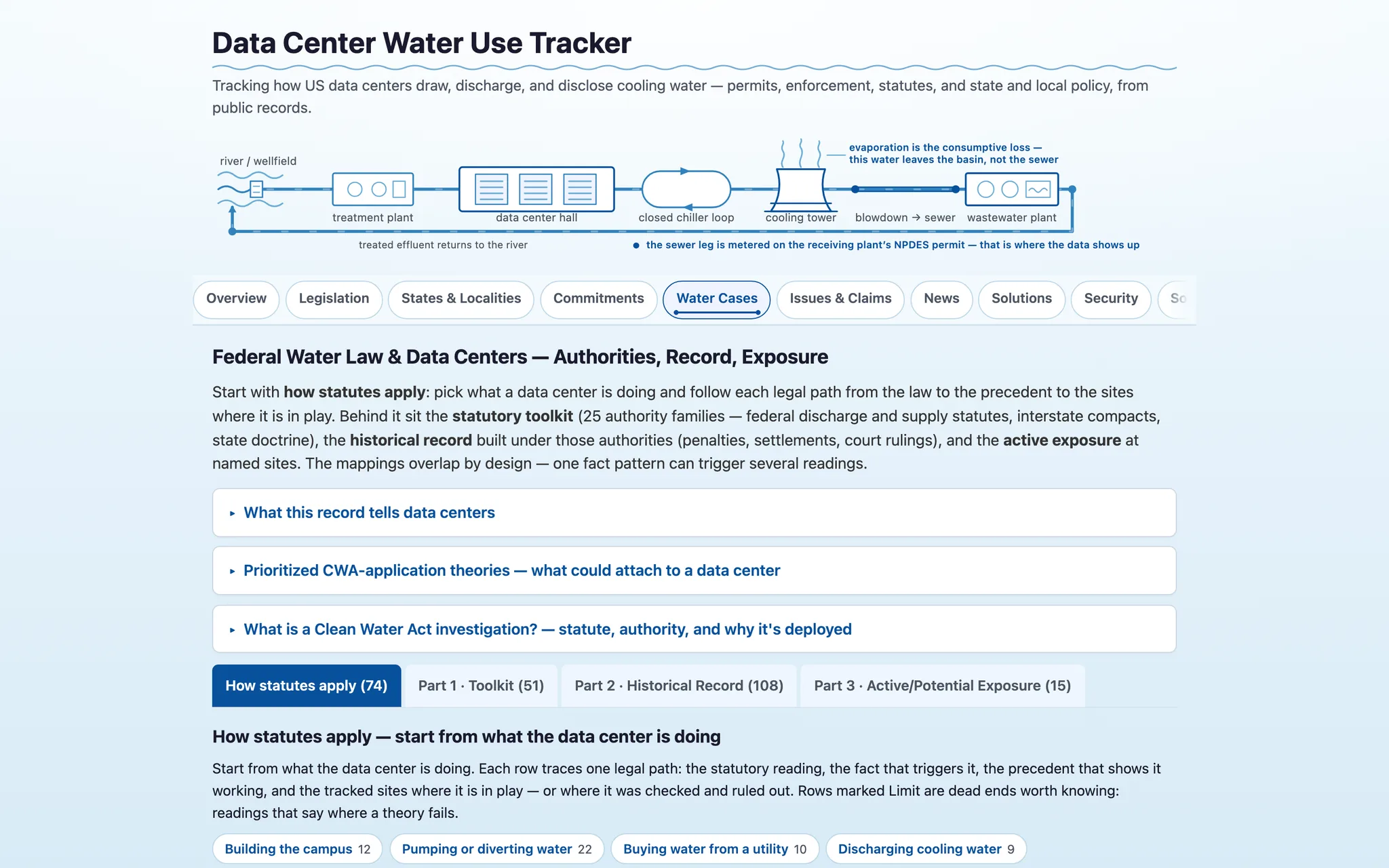
How It Works
- Public records: EPA and state environmental records, permits and discharge reports retain their origin links.
- Legal pathways: Water cases connect activities and statutes to precedent. A possible legal pathway is separate from an observed violation.
- Local decisions: Disclosure rules, moratoriums and ordinances retain jurisdiction, instrument and status.
- Commitments and conflicts: Company statements sit alongside named-site records, local agreements and documented community responses.
- Document pipeline: Cached extraction and a database feed the static site; dated records preserve what was observed at each capture.
Scope reviewed October 2, 2026 · Project documentation. Source data keeps its published dates.