USGS Mineral Commodity Summaries
Case study · Infrastructure
Explore USGS mineral production, trade, import reliance and country data, with verbatim units, footnotes, inline source-PDF pages and dataset downloads.
- What
- Explore USGS mineral production, trade, import reliance and country data, with verbatim units, footnotes, inline source-PDF pages and dataset downloads.
- Stack
- Python PDF extraction with per-commodity regression tests; static sortable table.
- Status
- LIVE
- Dates
- Scope reviewed October 2, 2026; data dates shown in the app
- Links
- Live site · Source code
Background
What does USGS report about mineral supply and import reliance?
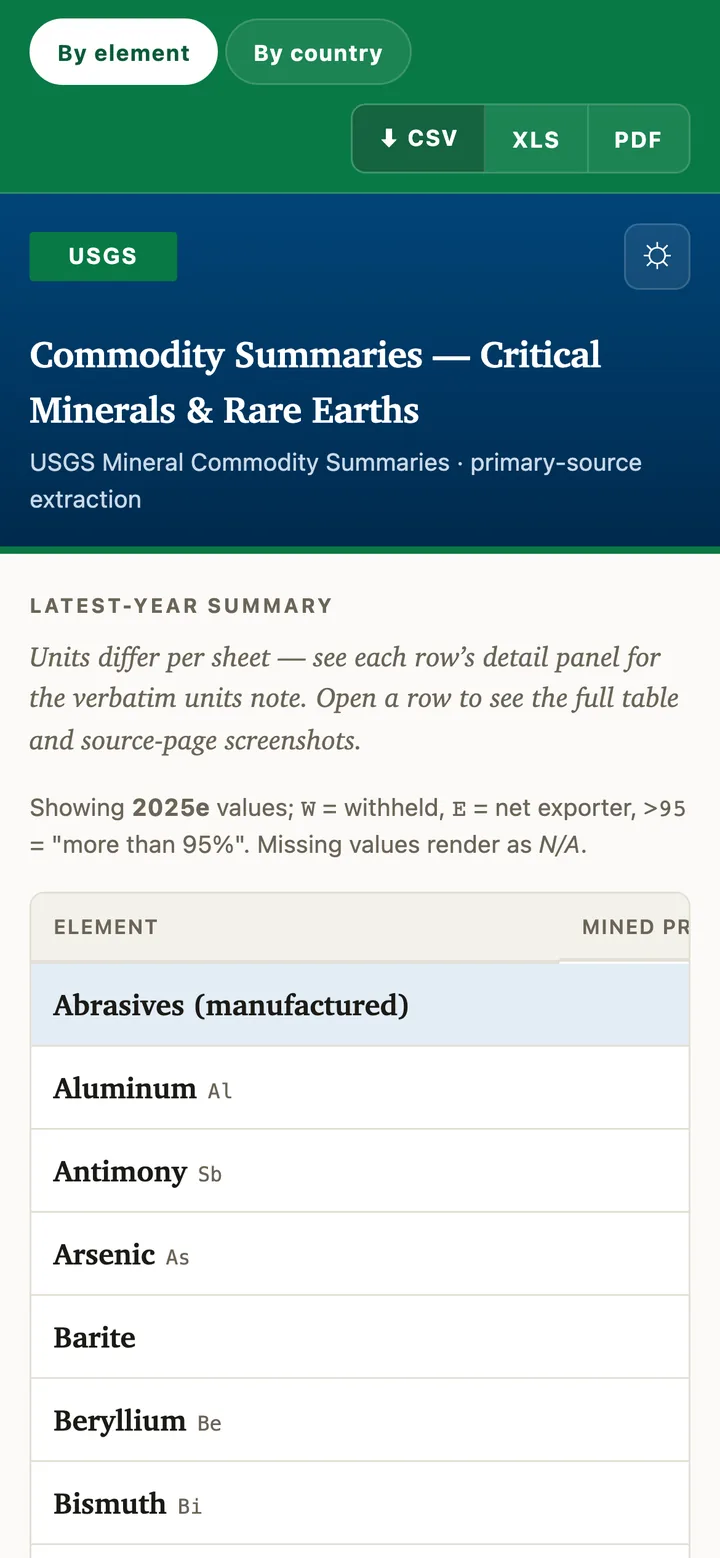
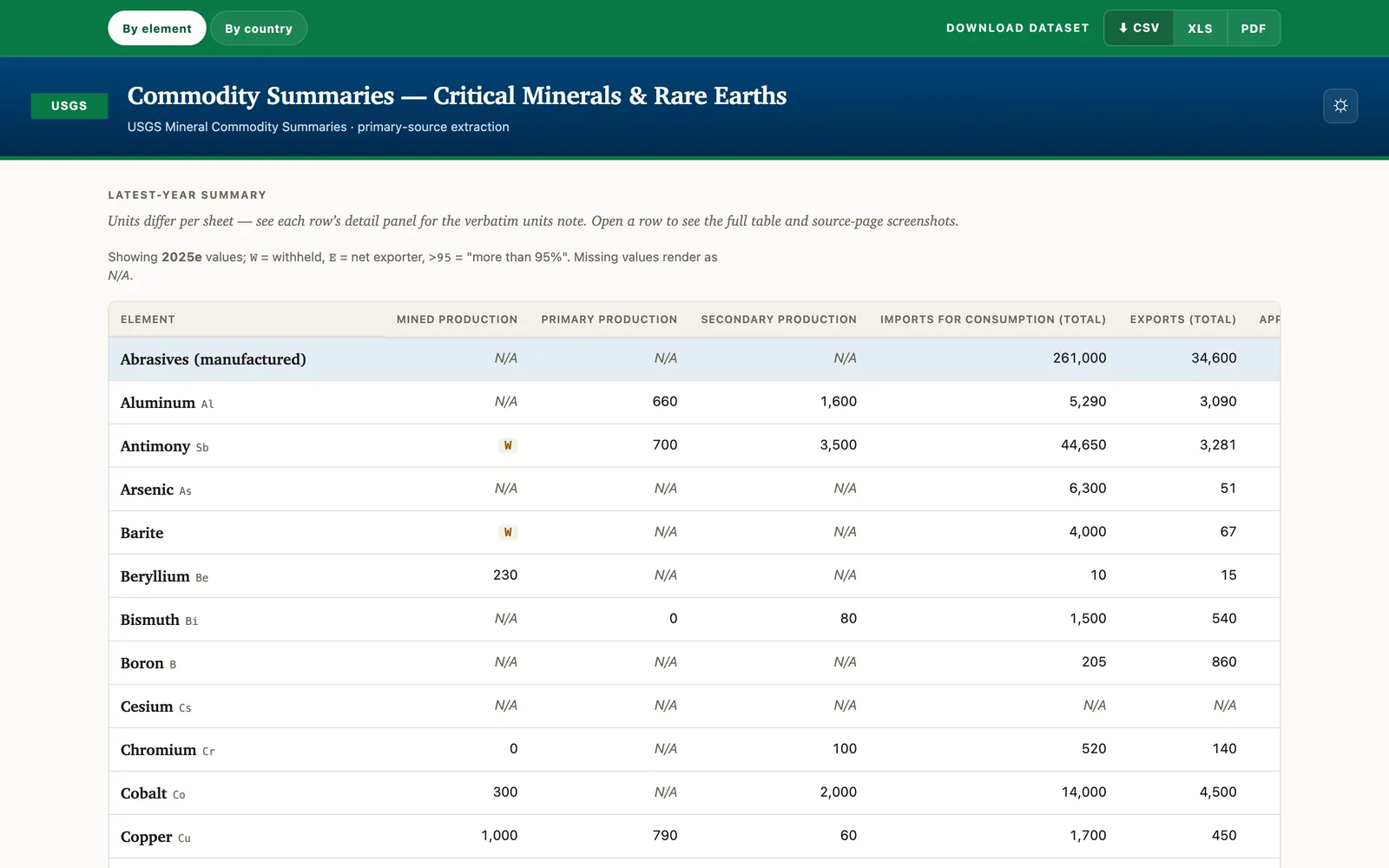
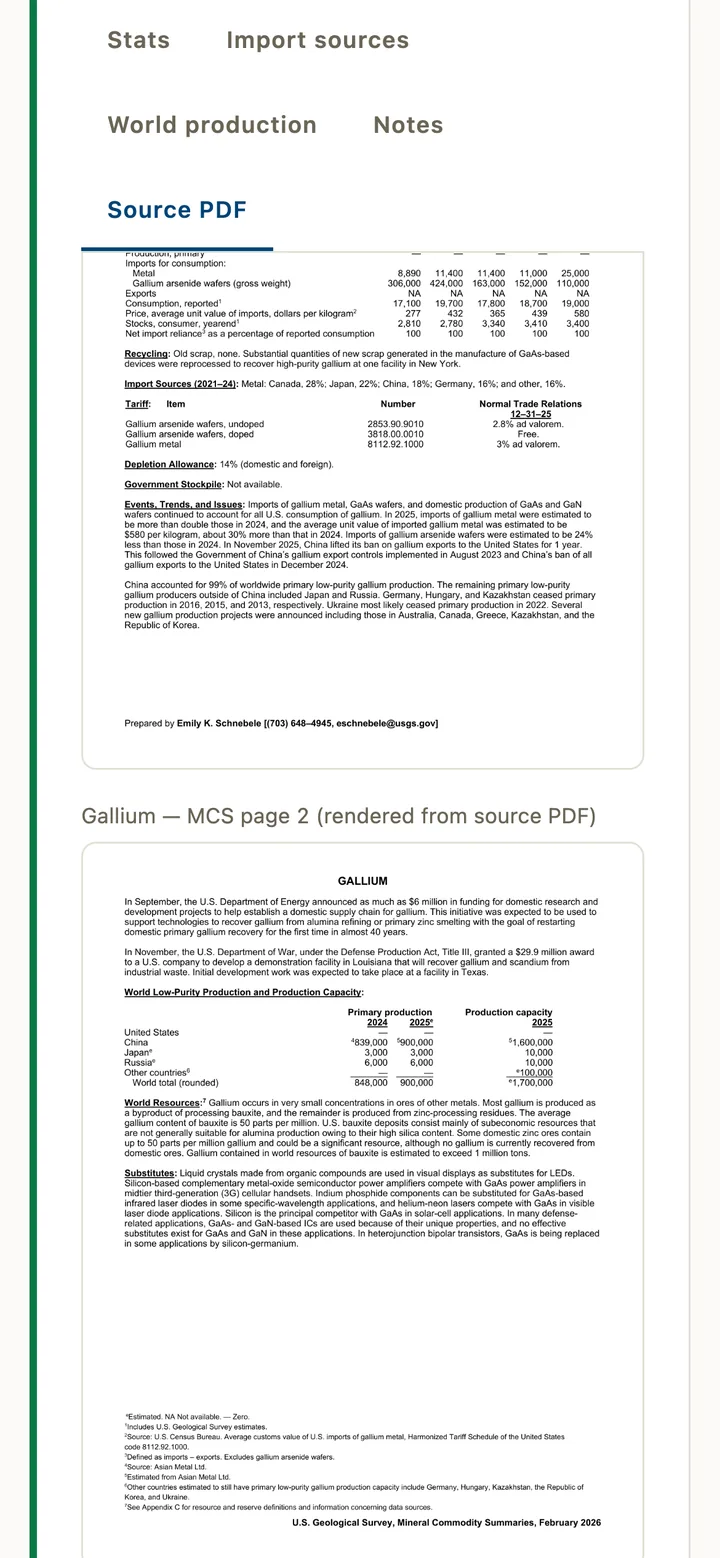
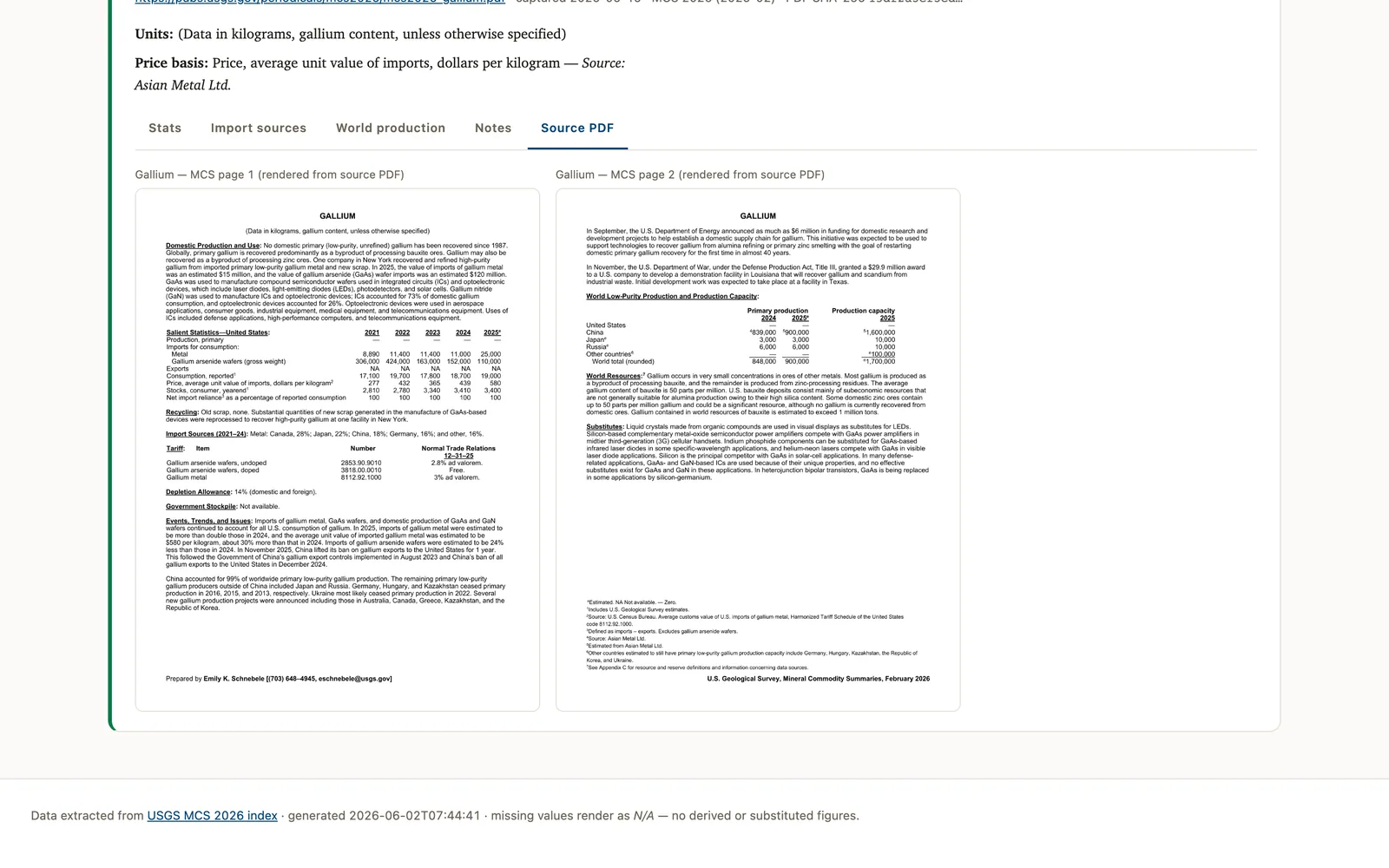
The viewer turns the USGS Mineral Commodity Summaries into an inspectable table while preserving the units, footnotes and source pages. Element and country views connect U.S. production and trade with reported supply origins.
A Look Inside
Each view shown on mobile and desktop — tap any image to open the live site.
How It Works
- Source extraction: Commodity records derive from public-domain USGS report PDFs.
- Tables: Production, imports, exports, prices and net import reliance retain the printed units and missing-value symbols.
- Country view: Import origins and world production are separate reported measures.
- Source pages: Inline PDF images, source URLs, file hashes and capture dates support verification.
- Downloads: CSV, spreadsheet and PDF controls expose the published dataset.
Scope reviewed October 2, 2026 · Project documentation. Source data keeps its published dates.