FERC Audit Explorer
Case study · Infrastructure
Search utility audit findings and corrective recommendations across FERC audits, prudence reviews, state PUC audits, rate cases and reference documents, with original text and page citations.
- What
- Search utility audit findings and corrective recommendations across FERC audits, prudence reviews, state PUC audits, rate cases and reference documents, with original text and page citations.
- Stack
- Python extraction pipeline; static HTML, CSS and JavaScript.
- Status
- LIVE
- Dates
- Scope reviewed October 2, 2026; data dates shown in the app
- Links
- Live site · Source code
Background
What recurring findings appear in utility audits, and where is the original evidence?
Final utility audits are published one document at a time. The explorer brings FERC and state reports together while preserving the difference between an audit finding, a prudence review and a reference document.
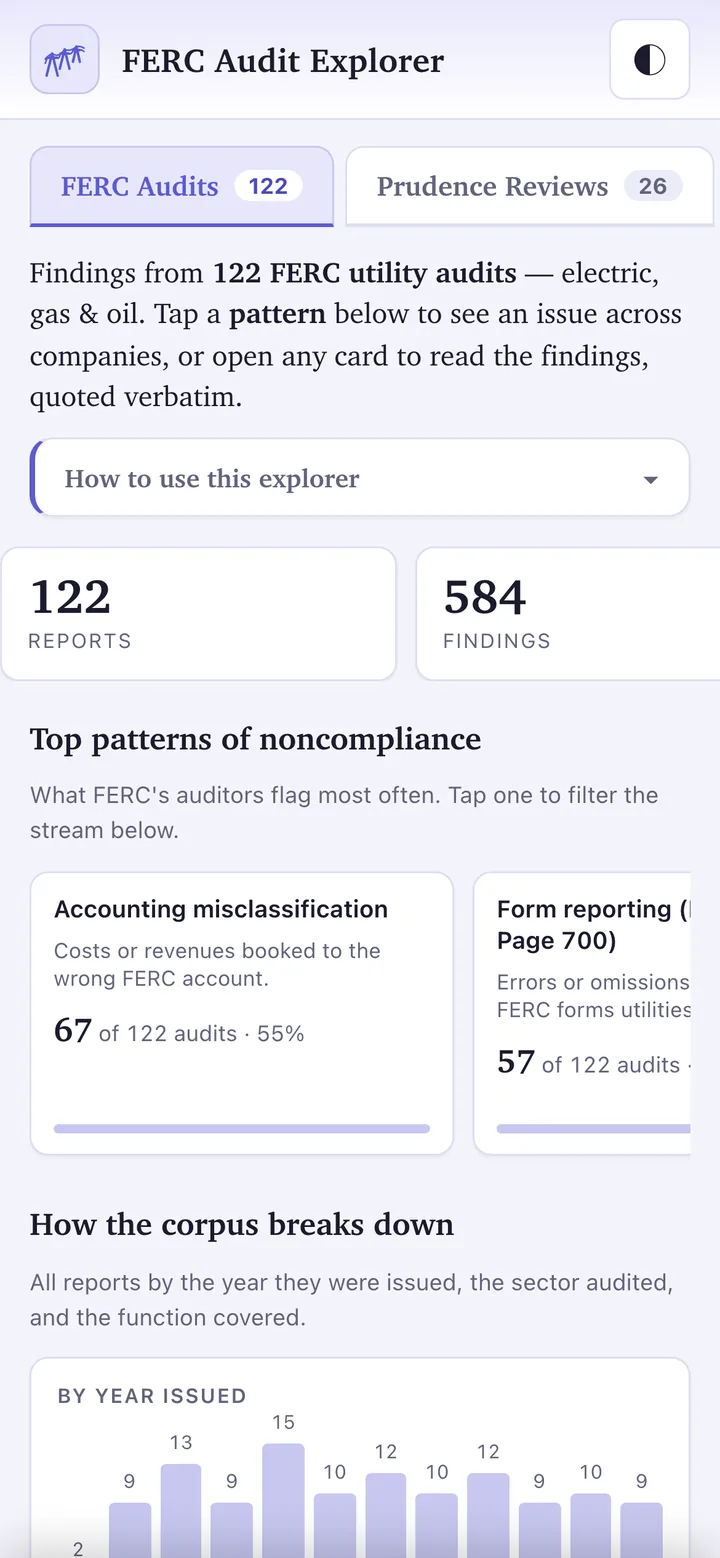
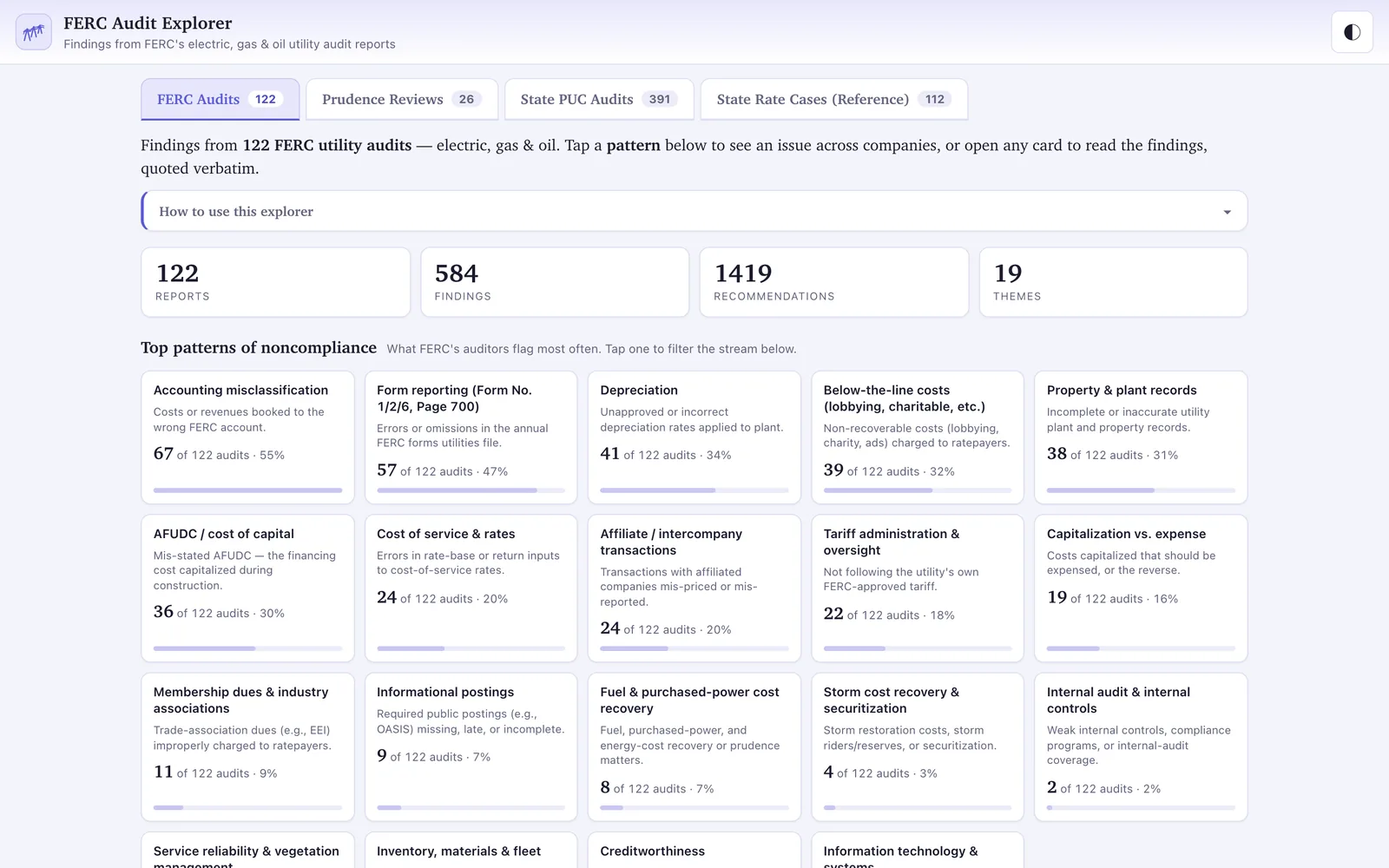
The current site separates five corpora: FERC audits, prudence reviews, state PUC audits, state rate cases and state reference documents. Counts belong to the published snapshot and can change as records are added.
A Look Inside
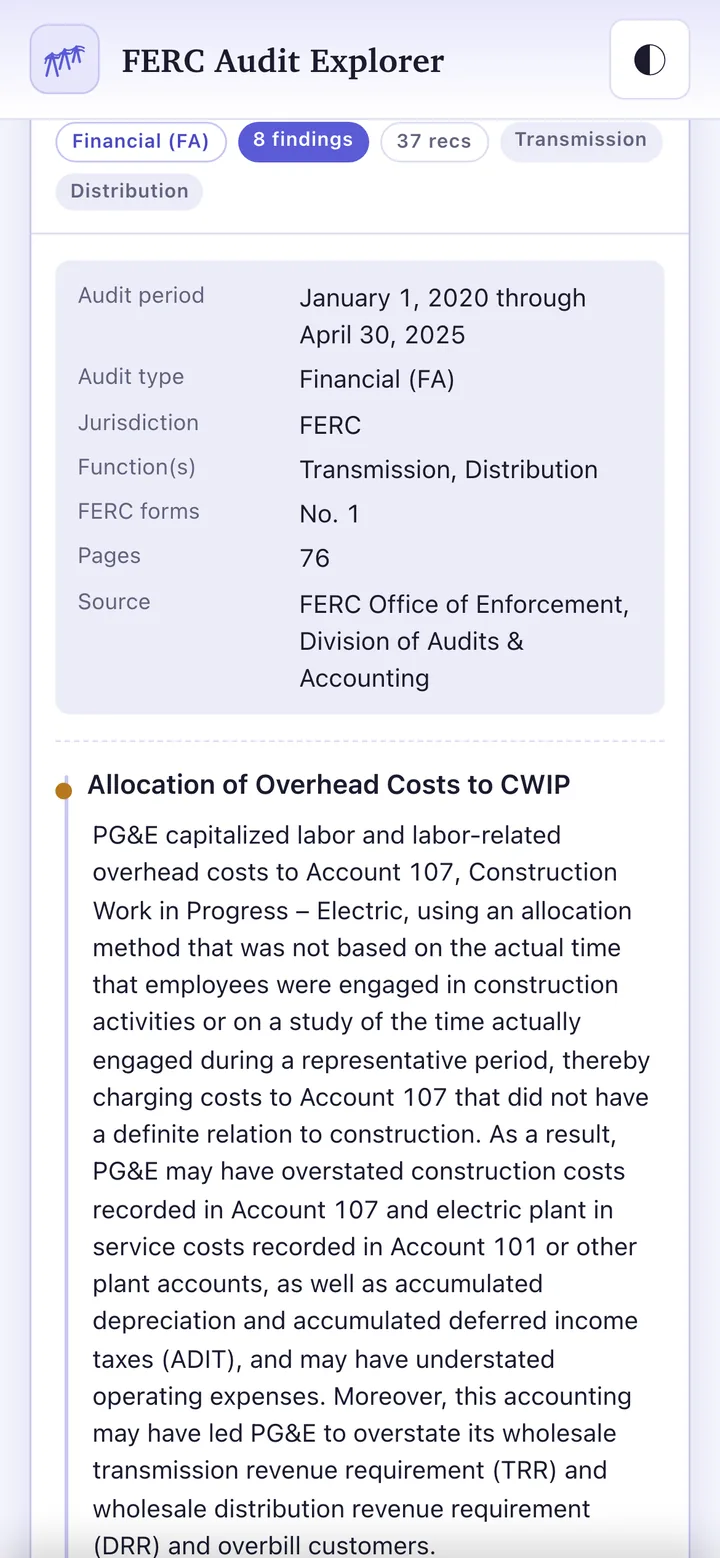
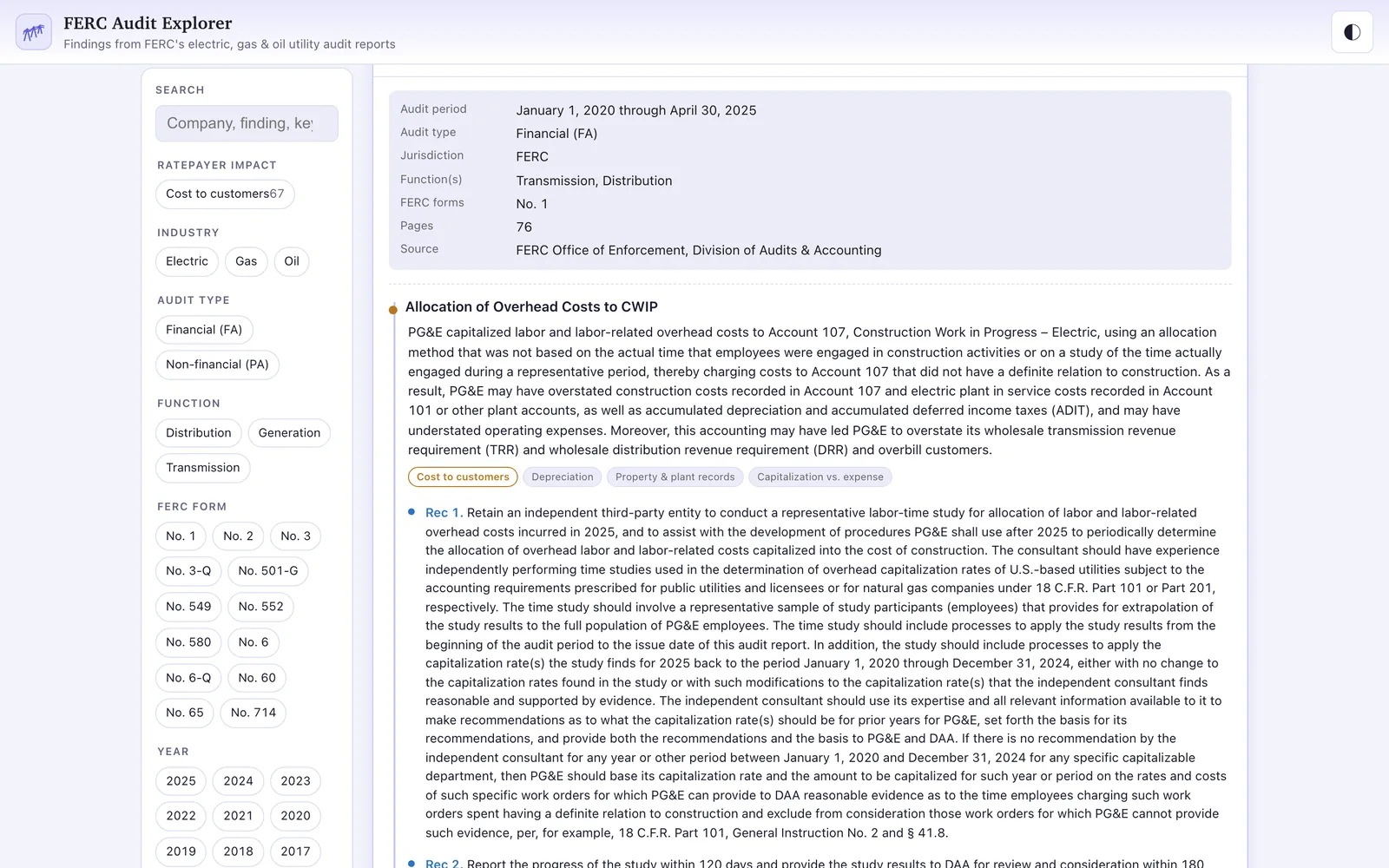
Each view shown on mobile and desktop — tap any image to open the live site.
How It Works
- Evidence: Findings of noncompliance and corrective recommendations preserve verbatim report language and page references.
- Pipeline: Cached PDFs are extracted, classified and structured before the static site is built.
- Search: Regulator, industry, function, year and keyword filters operate across the selected corpus.
- Patterns: Recurring topics make reports easier to navigate; a topic count is not a prediction of future misconduct.
- Inspection: Expandable reports link readers back to the original document and its cited pages.
Scope reviewed October 2, 2026 · Project documentation. Source data keeps its published dates.