Data Center Community Benefits
Case study · Infrastructure
Compare operator promises with site evidence, ratepayer pledges, moratoriums, large-load tariffs and regulatory dockets. A policy playbook collects state actions and community-benefit agreements.
- What
- Compare operator promises with site evidence, ratepayer pledges, moratoriums, large-load tariffs and regulatory dockets. A policy playbook collects state actions and community-benefit agreements.
- Stack
- Python data validation and publishing; static HTML, JavaScript and lazy-loaded maps.
- Status
- LIVE
- Dates
- Scope reviewed October 2, 2026; data dates shown in the app
- Links
- Live site · Source code
Background
What do data centers promise, and what can communities require or verify?
Operators publish commitments about jobs, taxes, energy, water and community investment. Local agreements, utility proceedings and documented responses show what those commitments mean at a particular site.
The dashboard now joins company comparisons, site records, the Ratepayer Protection Pledge, moratoriums, tariffs and rate cases with a Policy Playbook of state actions and community-benefit agreements.
A Look Inside
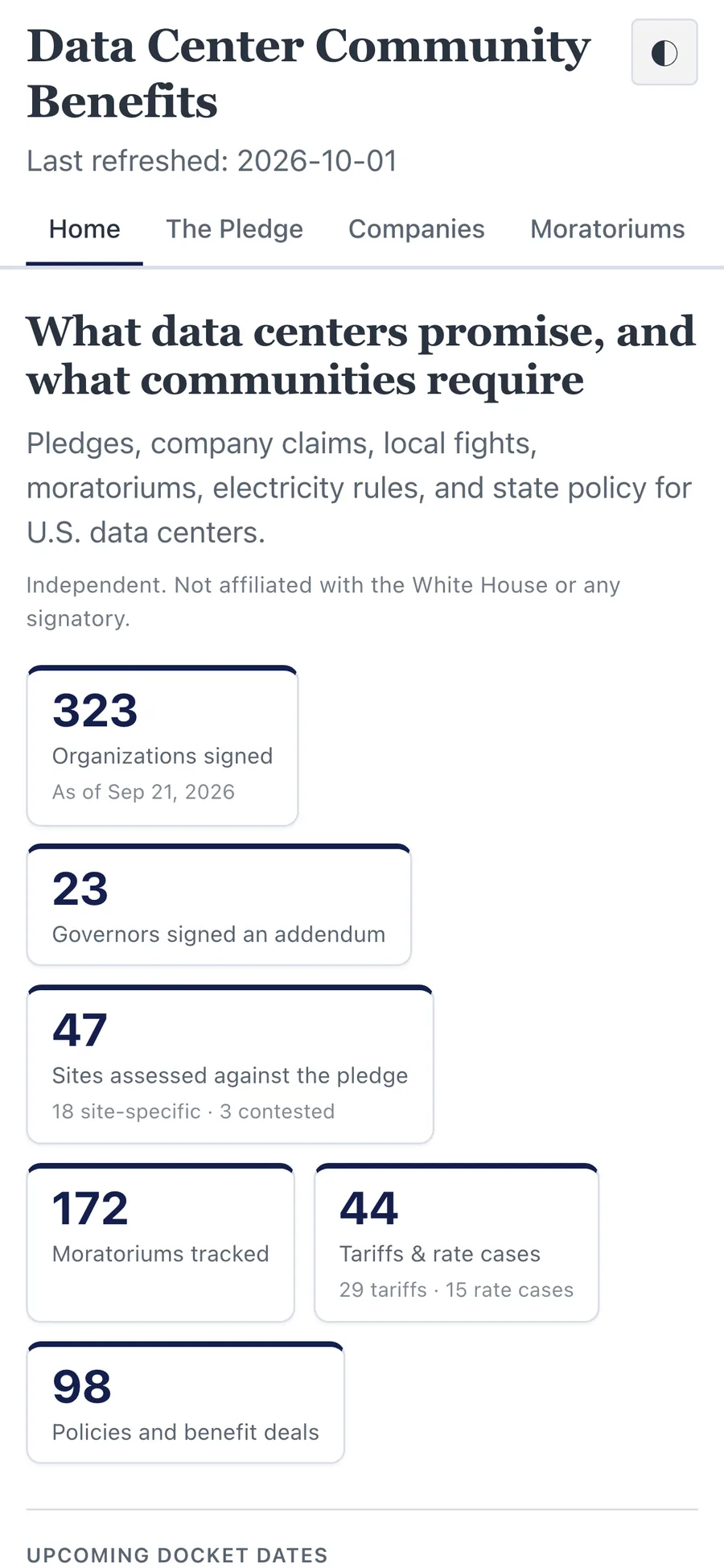
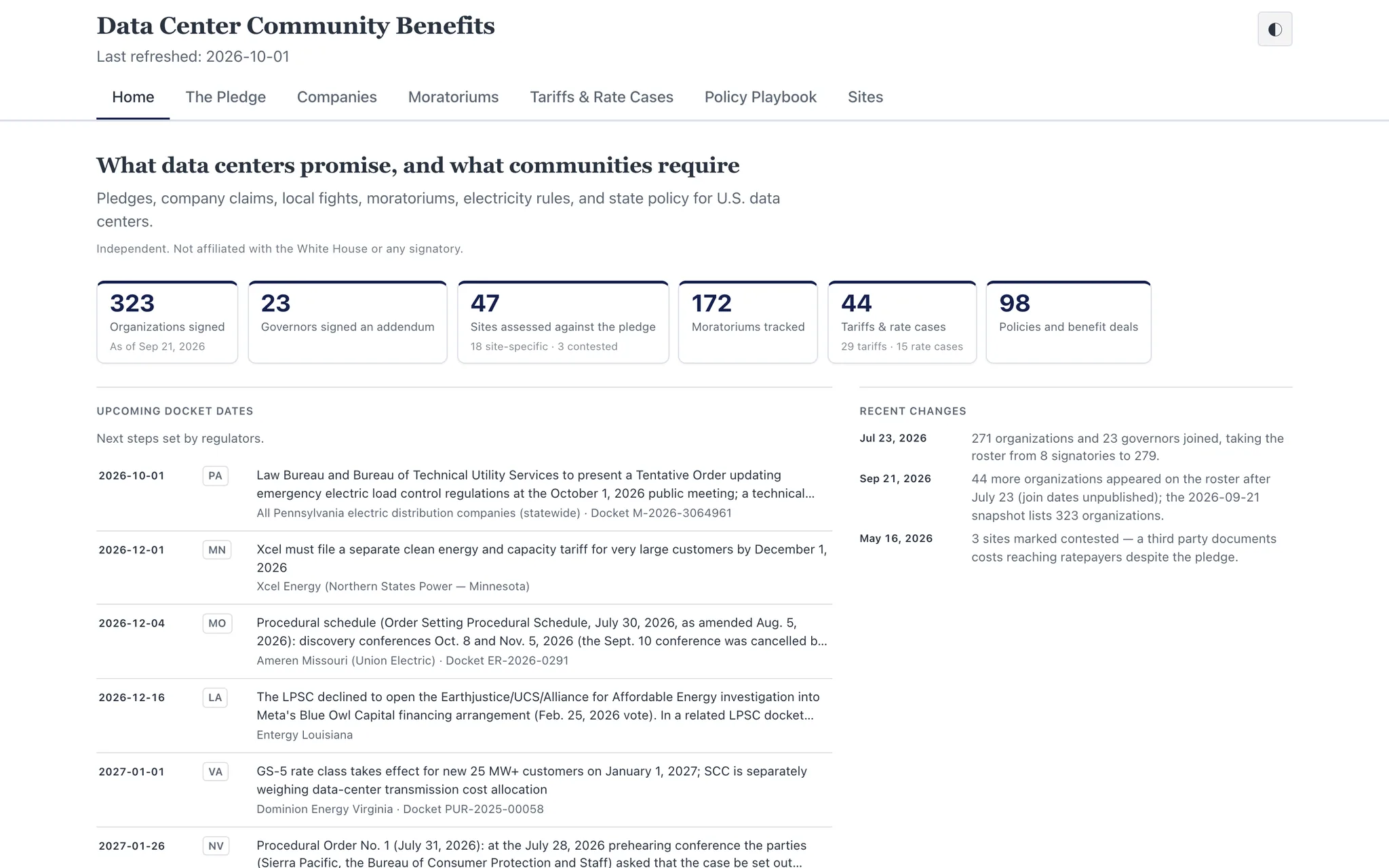
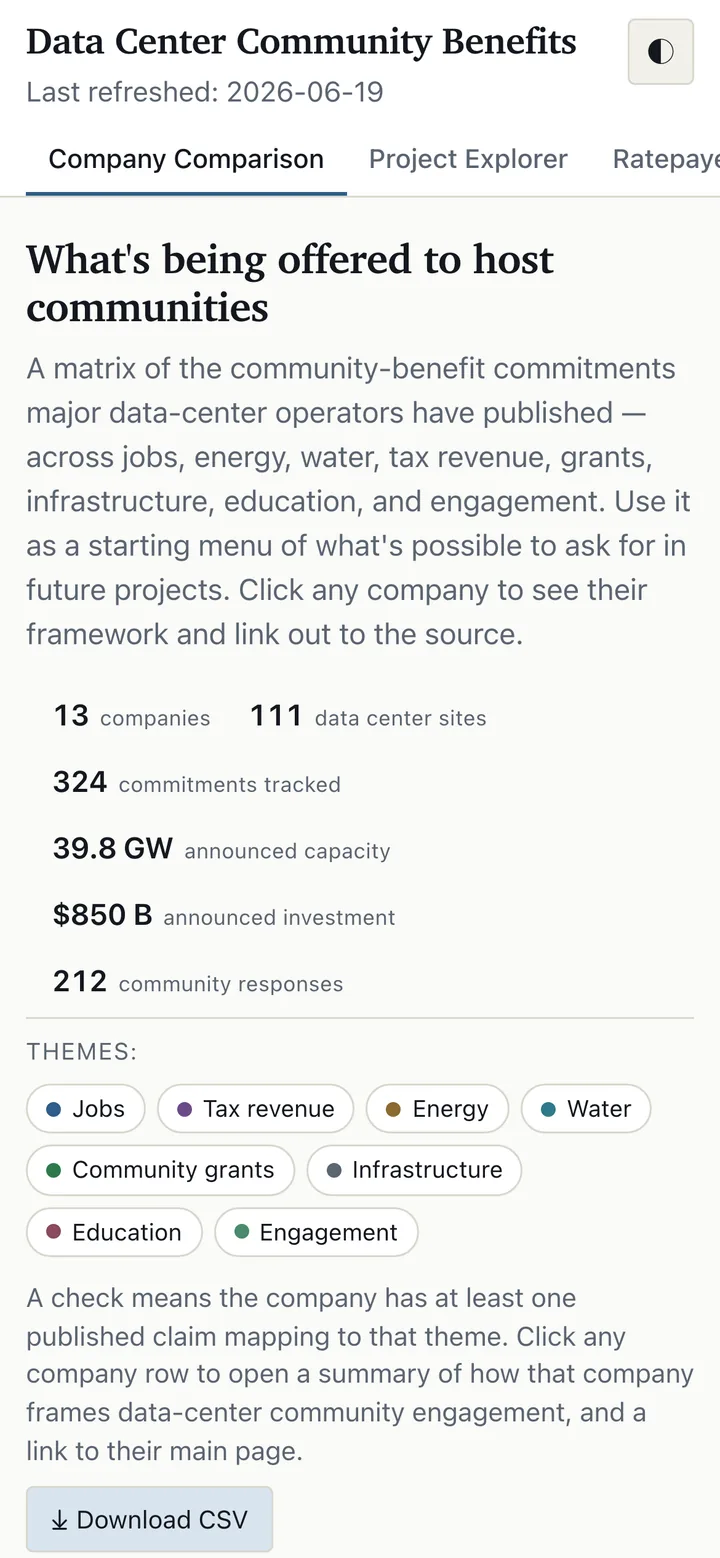
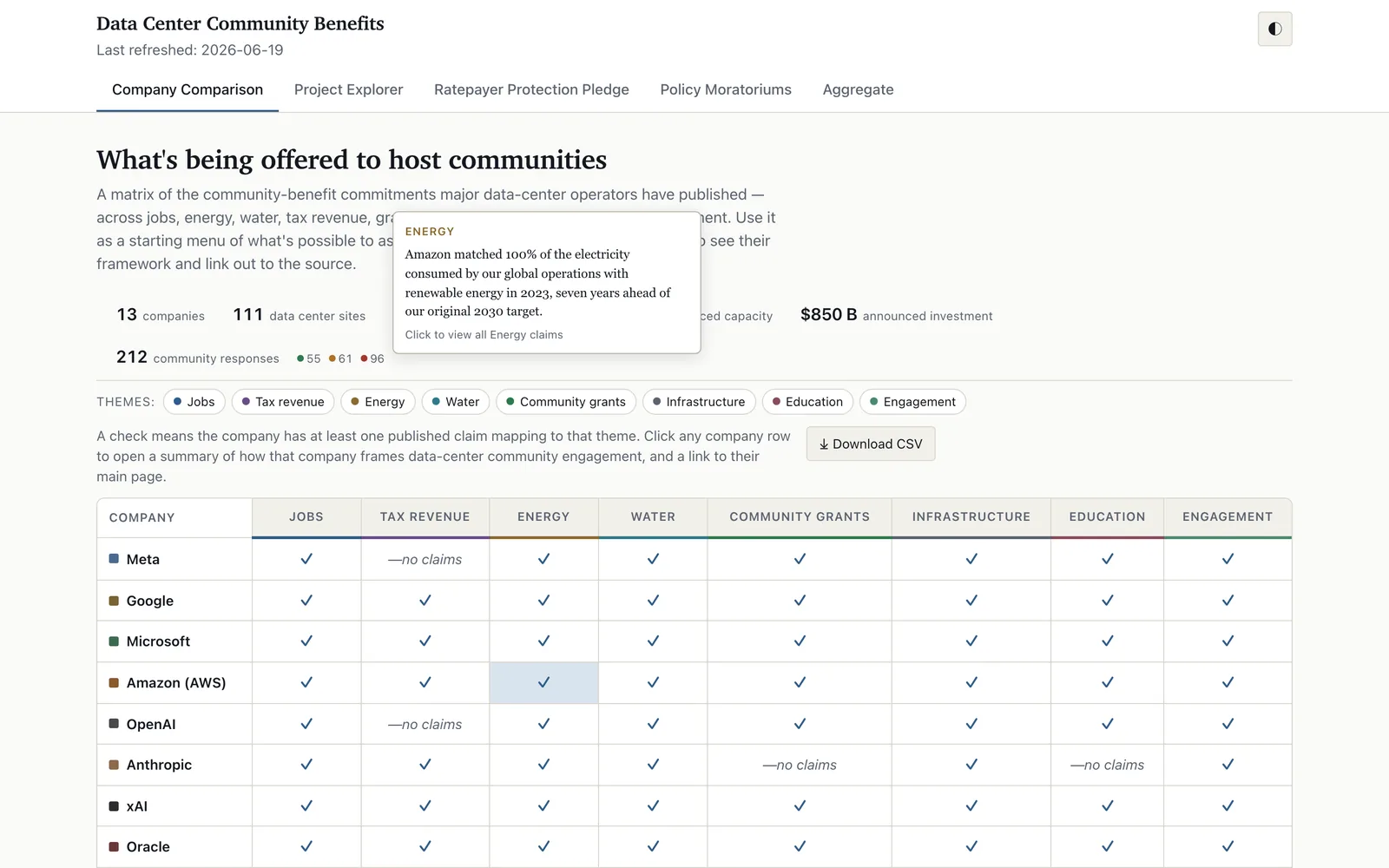
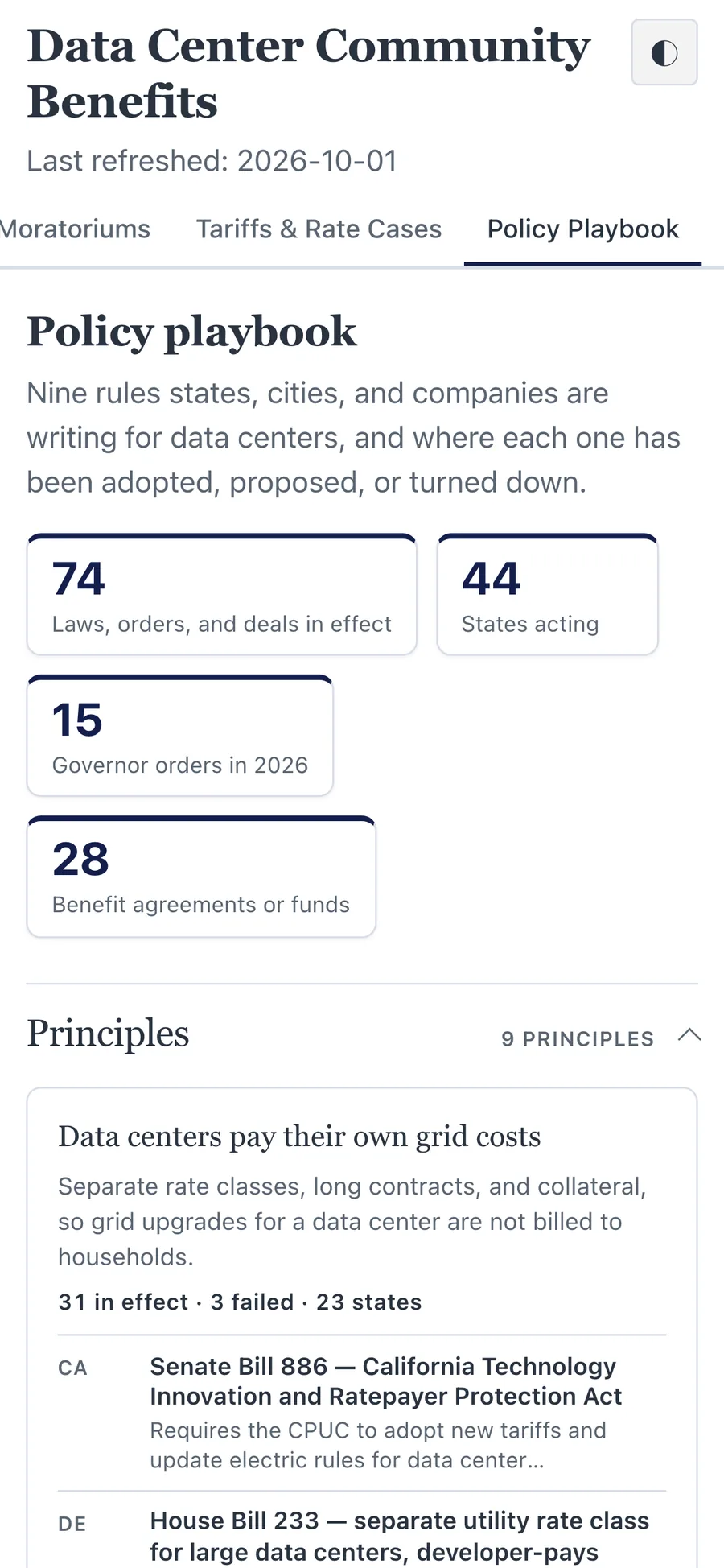
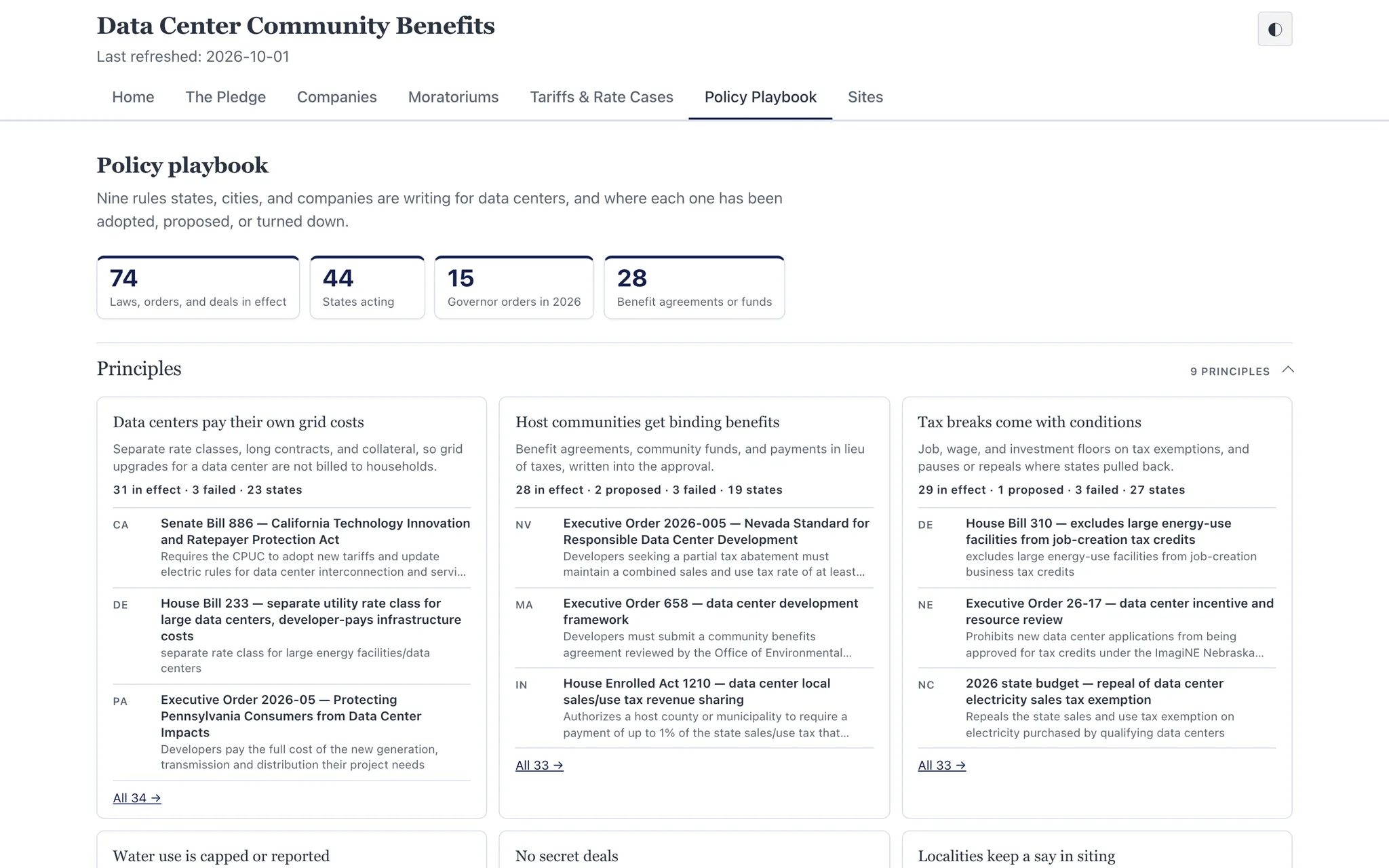
Each view shown on mobile and desktop — tap any image to open the live site.
How It Works
- Company comparison: A company-by-theme matrix leads to verbatim claims and their first-party sources.
- Site evidence: Project records separate operator, offtaker, investment, power and status. Delivered-versus-promised assessments require cited evidence.
- Ratepayer protection: National pledge signatures remain distinct from site-specific commitments and contested implementation.
- Public decisions: Moratoriums and utility dockets retain their legal status and regulator-announced dates.
- Policy Playbook: Source-linked policy and agreement records show applicable conditions, authority and funding limits rather than a universal negotiating template.
Scope reviewed October 2, 2026 · Project documentation. Source data keeps its published dates.