DOE-MCP
Case study · Policy
Public DOE and national-laboratory data, divided into focused MCP servers instead of one overloaded catalog.
- What
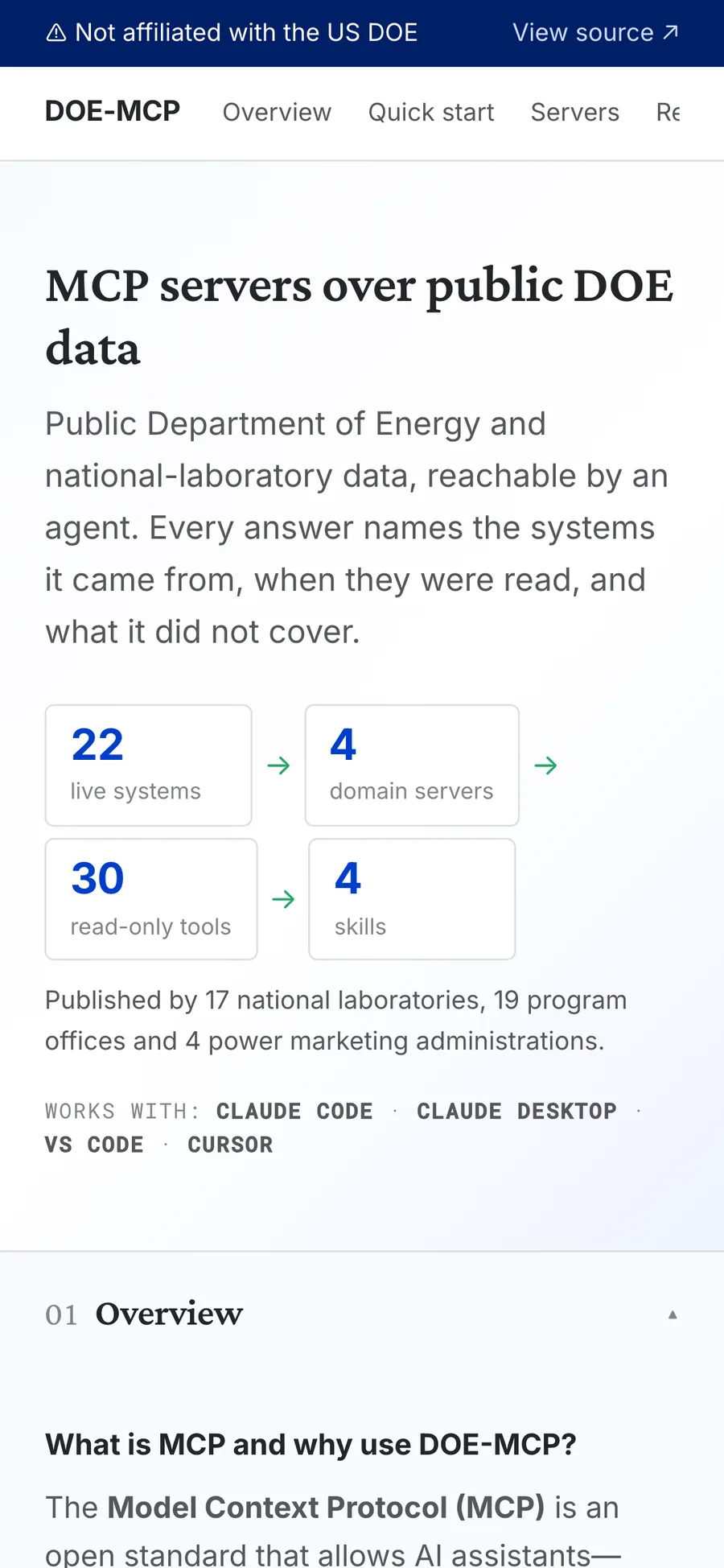
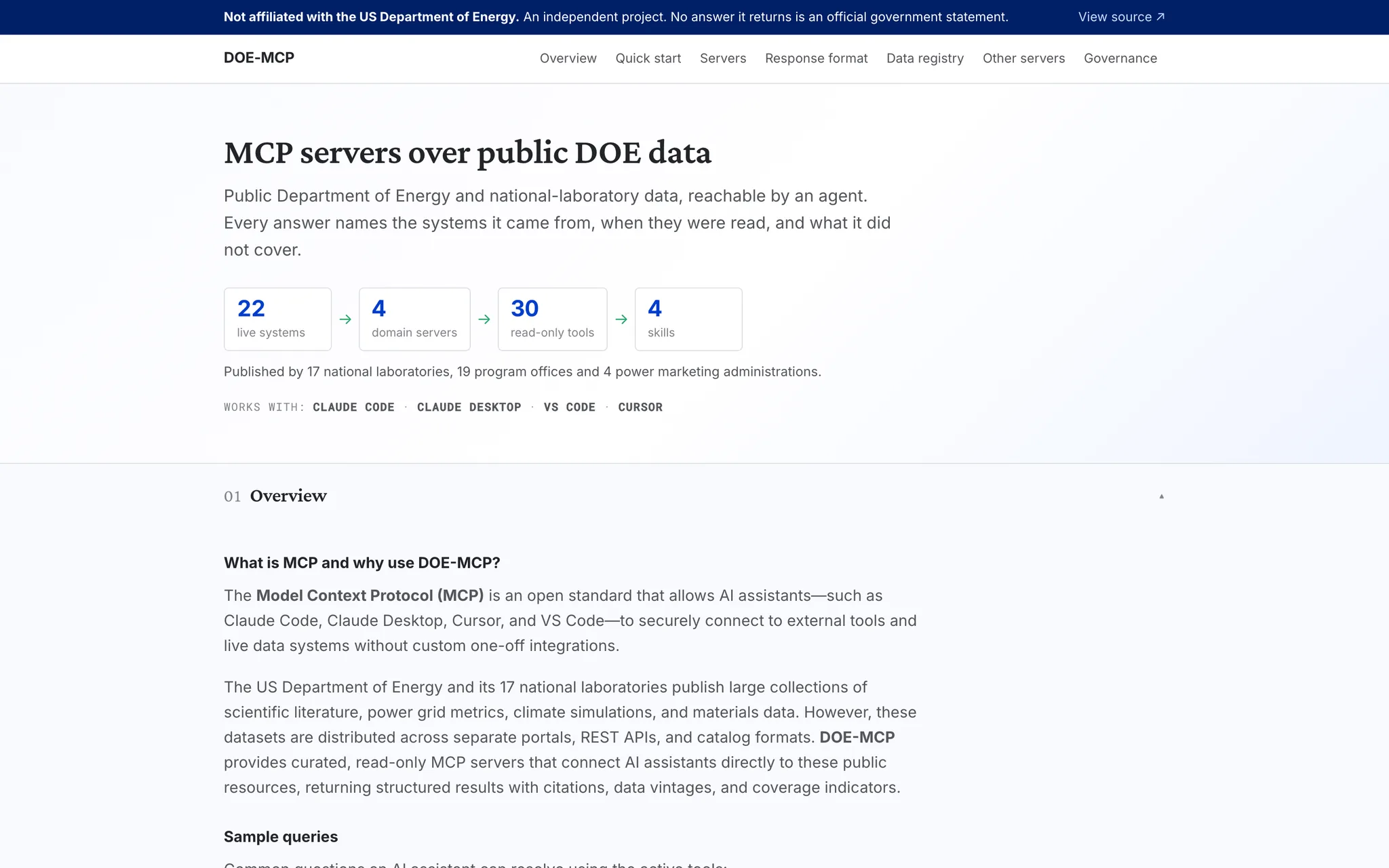
- Search DOE-funded research, energy operations, earth data, and materials through typed tools that state their sources, limits, and freshness.
- Stack
- Python; four MCP servers; 36 default tools; 83 source manifests; 17 publisher adapters.
- Status
- Early · four servers work against live endpoints
- Dates
- Published September 2026
- Links
- Live site · Source code
Background
How can an AI assistant query public DOE data without confusing an empty search with missing coverage?
DOE and its 17 national laboratories publish research papers, datasets, grid operations, weather records, facility inventories, patents, software, and materials data across many unrelated systems. Most are not available through MCP, and their names, publishers, funders, access rules, and pagination behave differently.
DOE-MCP groups that public data by task. Four read-only servers cover research, energy data, earth science, and materials. The project is independent and is not affiliated with or endorsed by DOE, a national laboratory, or a program office.
A Look Inside
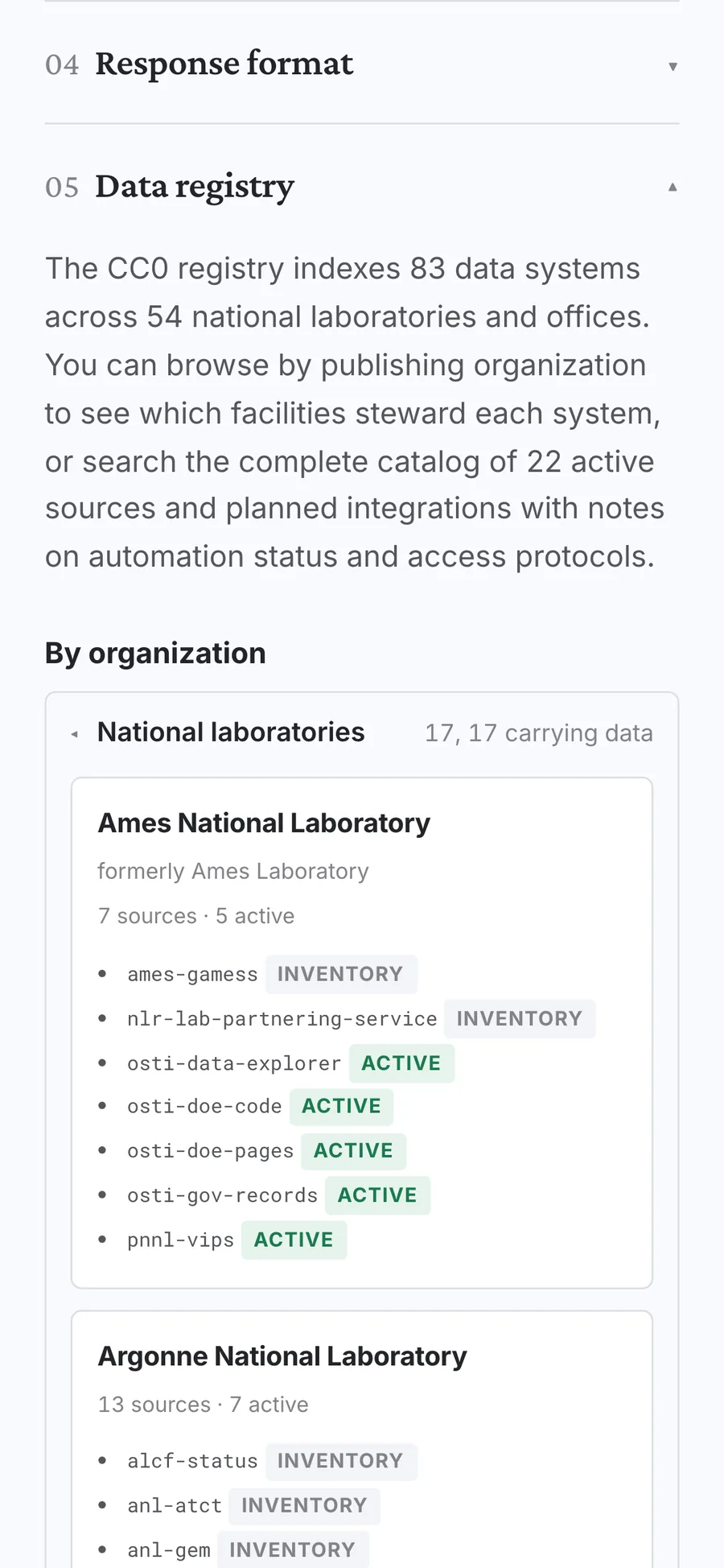
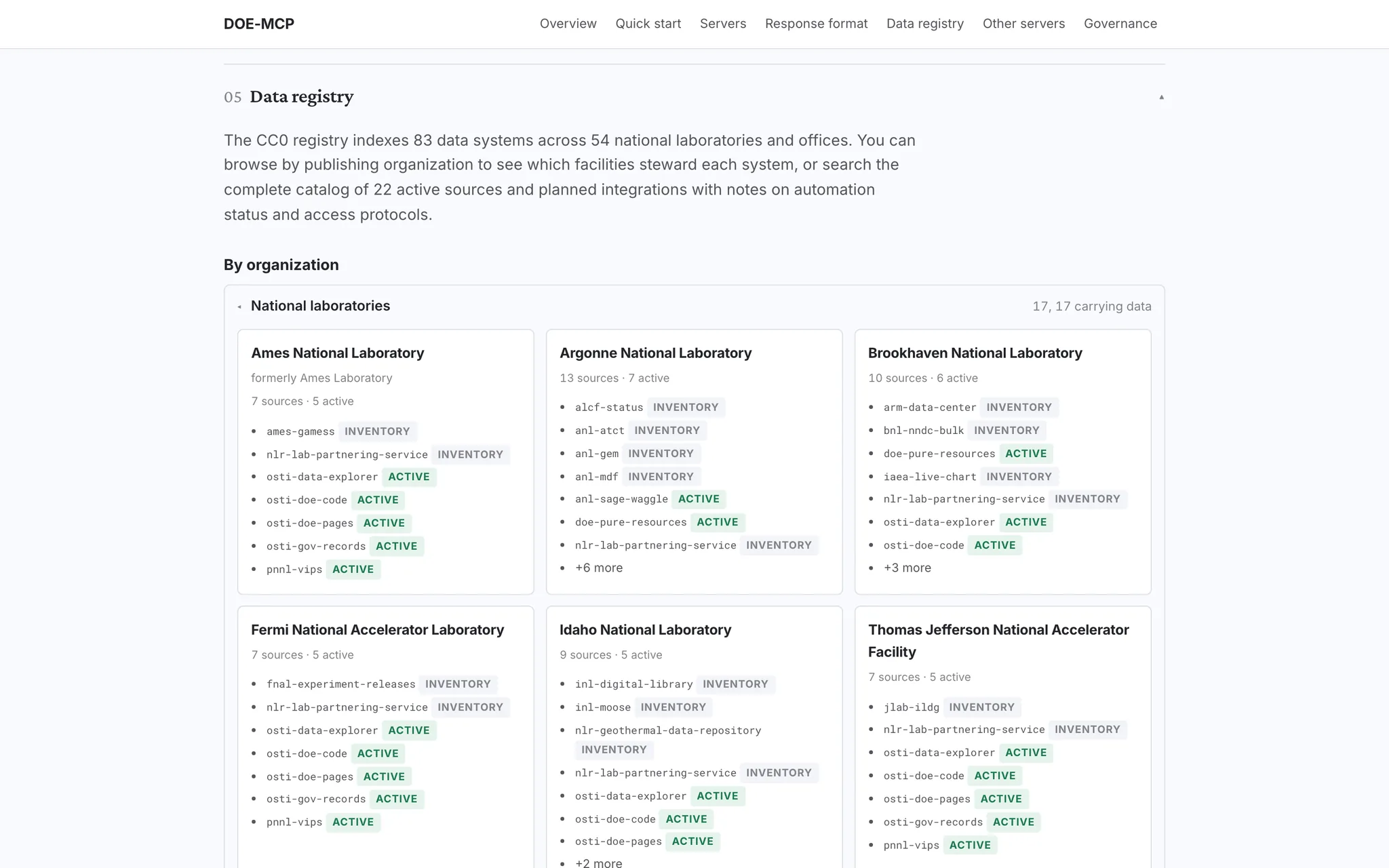
Each view shown on mobile and desktop — tap any image to open the live site.
How It Works
- Focused servers: research has 11 default tools, energy 10, earth 8, and materials 7.
- Registry first: 83 manifests describe 22 active sources and the gaps blocking the rest.
- Evidence envelope: each answer separates data, provenance, evidence, coverage, warnings, and execution details.
- Honest empty results: “covered, no match” stays distinct from “this project has no source.”
- Reproducible docs: the website and tool reference are generated from the assembled servers and registry; CI fails on drift.
The current registry reports 20,176,445 records reachable without credentials. Other science domains remain inventory, not shipped capability.