Fantasy GM
Case study · Tech & fun
A fantasy WNBA assistant with waiver targets, roster needs, trades and transaction history, plus a season retrospective. Private league access stays on the owner’s machine.
- What
- A fantasy WNBA assistant with waiver targets, roster needs, trades and transaction history, plus a season retrospective. Private league access stays on the owner’s machine.
- Stack
- Python + Pydantic pipeline over ESPN's fantasy API; static site; pytest on the math.
- Status
- LIVE
- Dates
- Scope reviewed October 2, 2026; data dates shown in the app
- Links
- Live site · Source code
Background
Which waiver move addresses a fantasy roster’s actual need?
Fantasy GM used a private ESPN league’s snapshots to connect roster balance, projected production and the real game schedule. The public site now includes a season retrospective alongside the league views.
A Look Inside
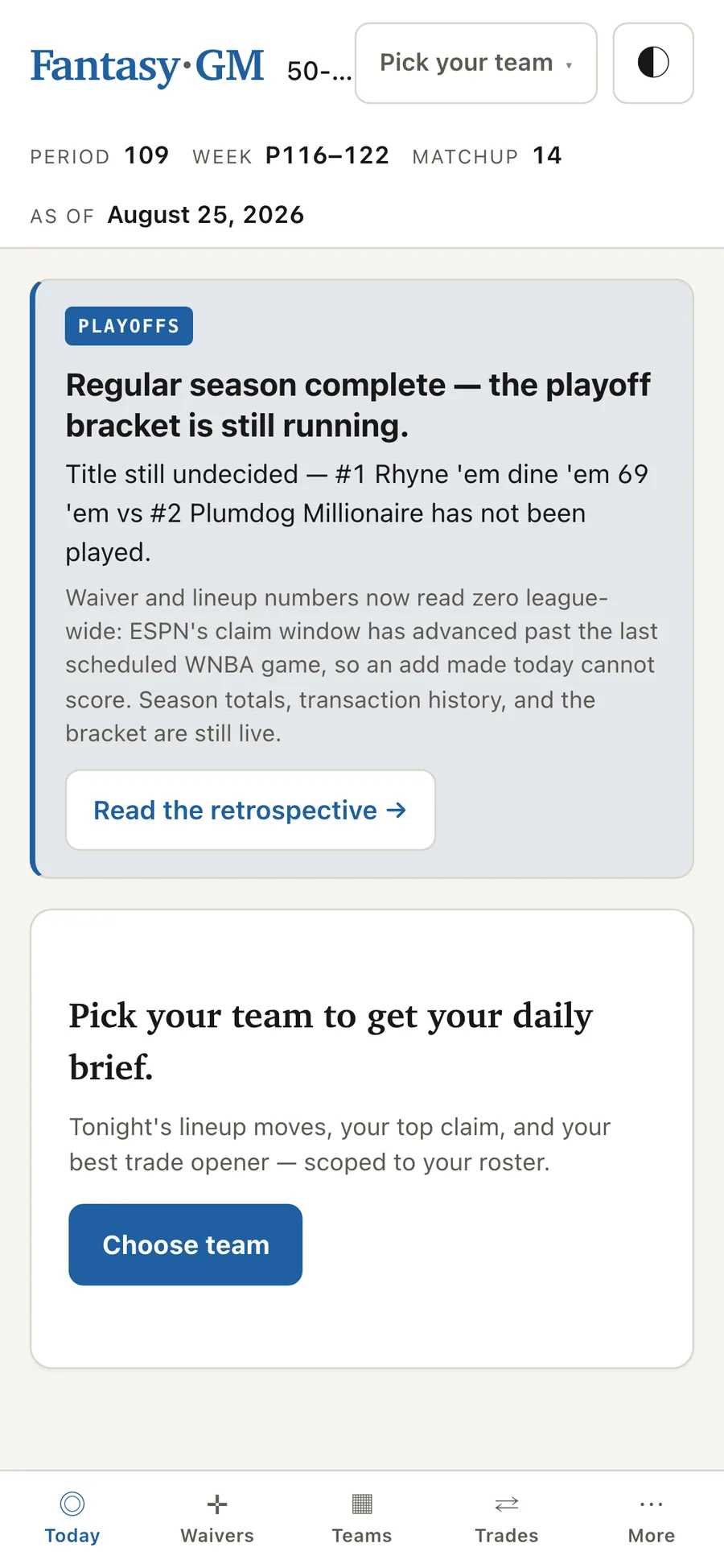
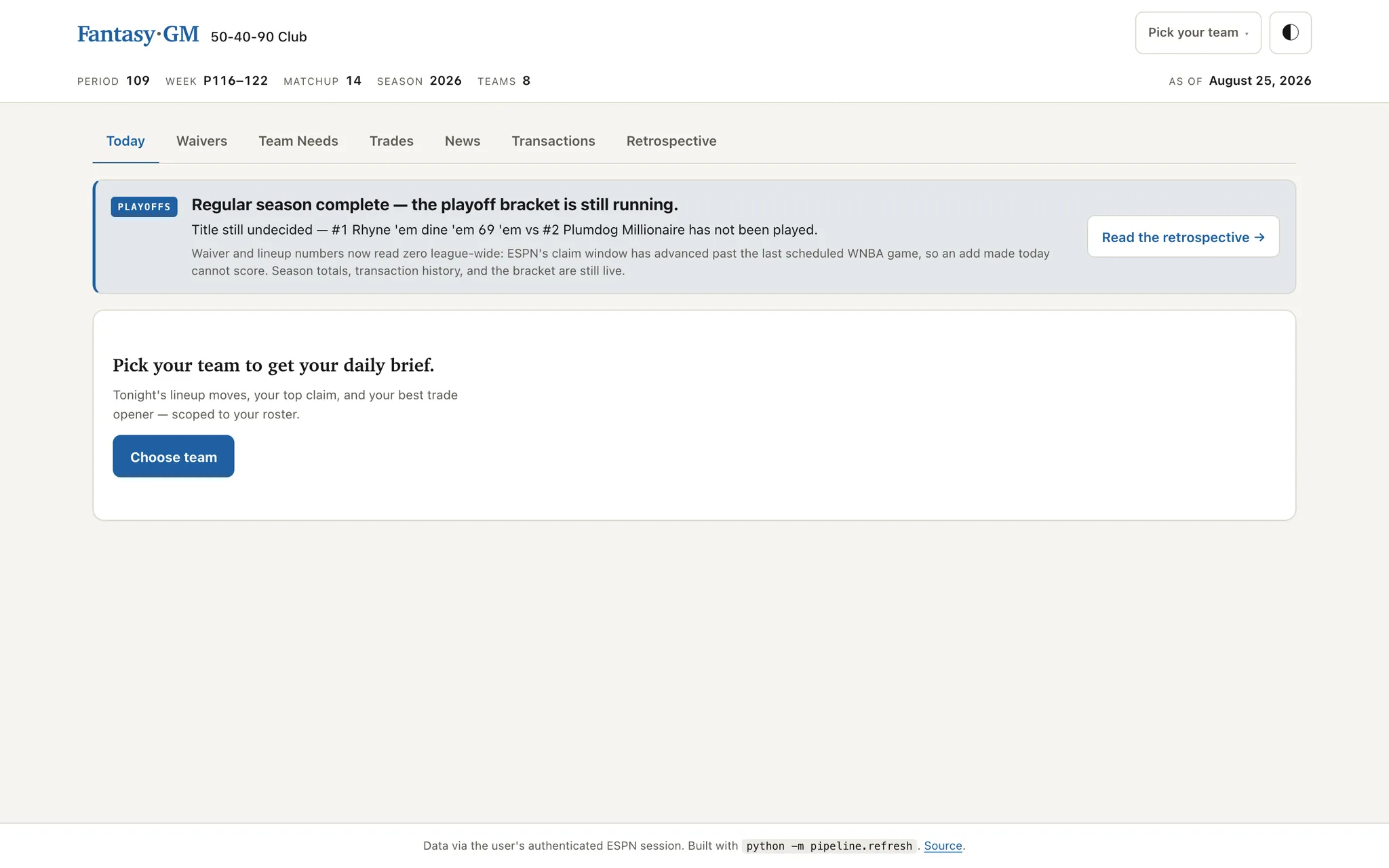
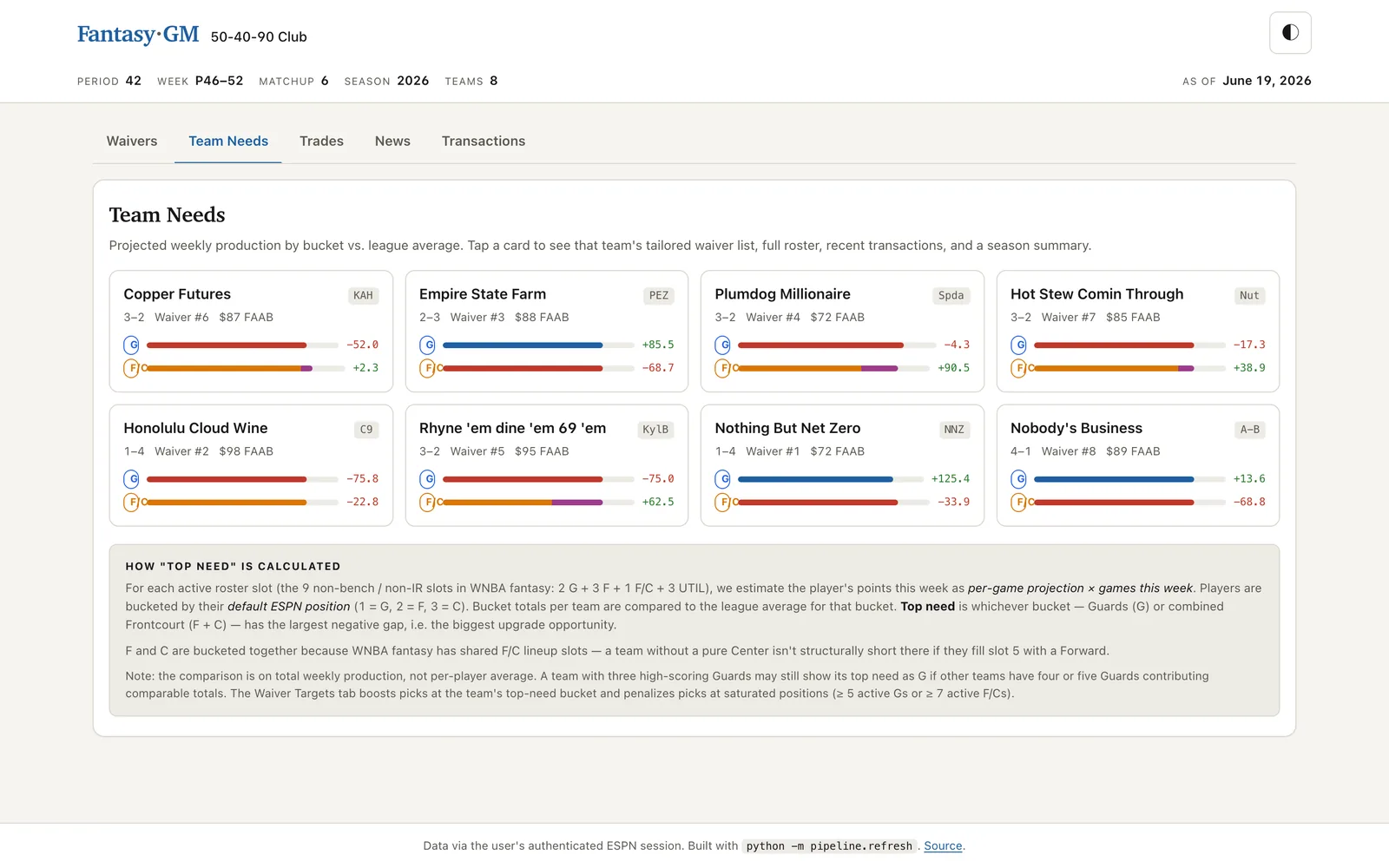
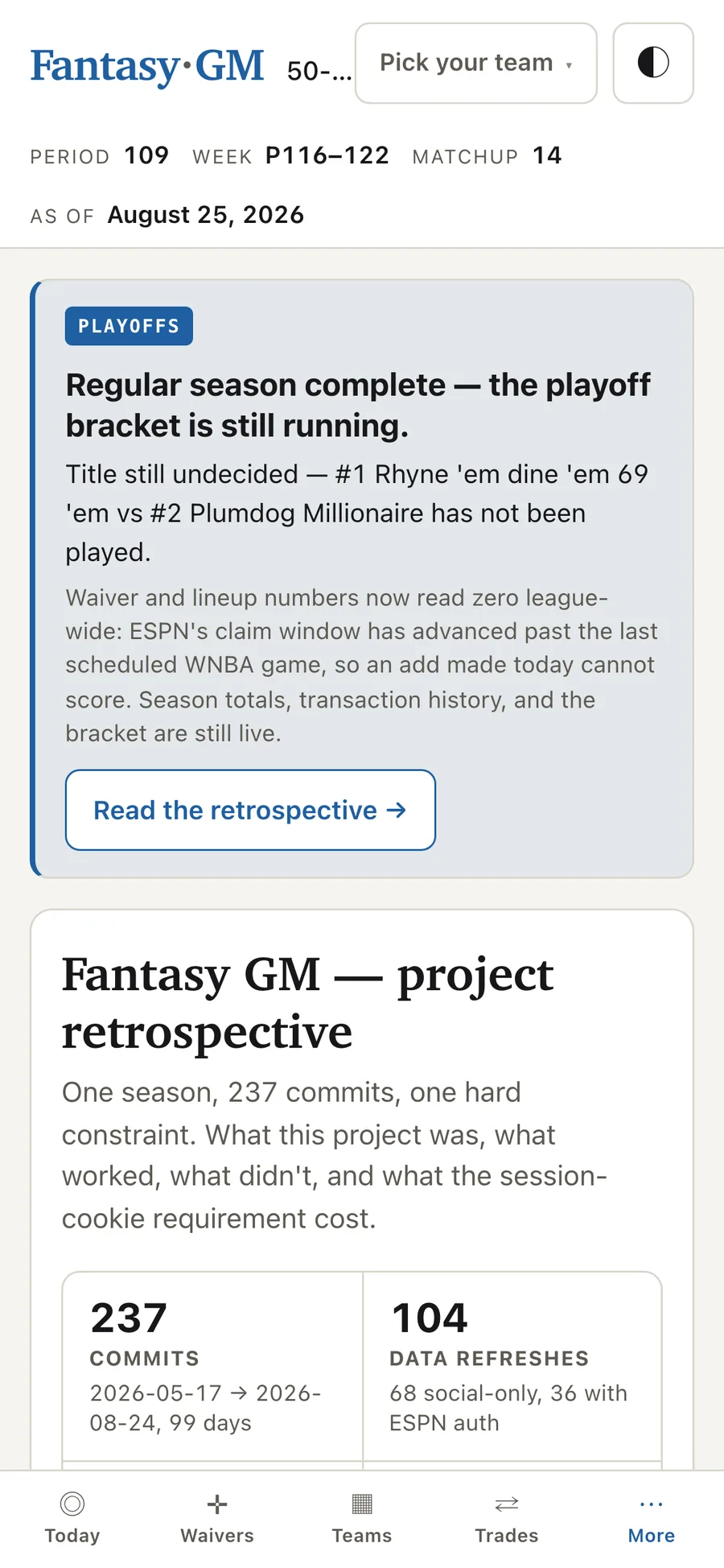
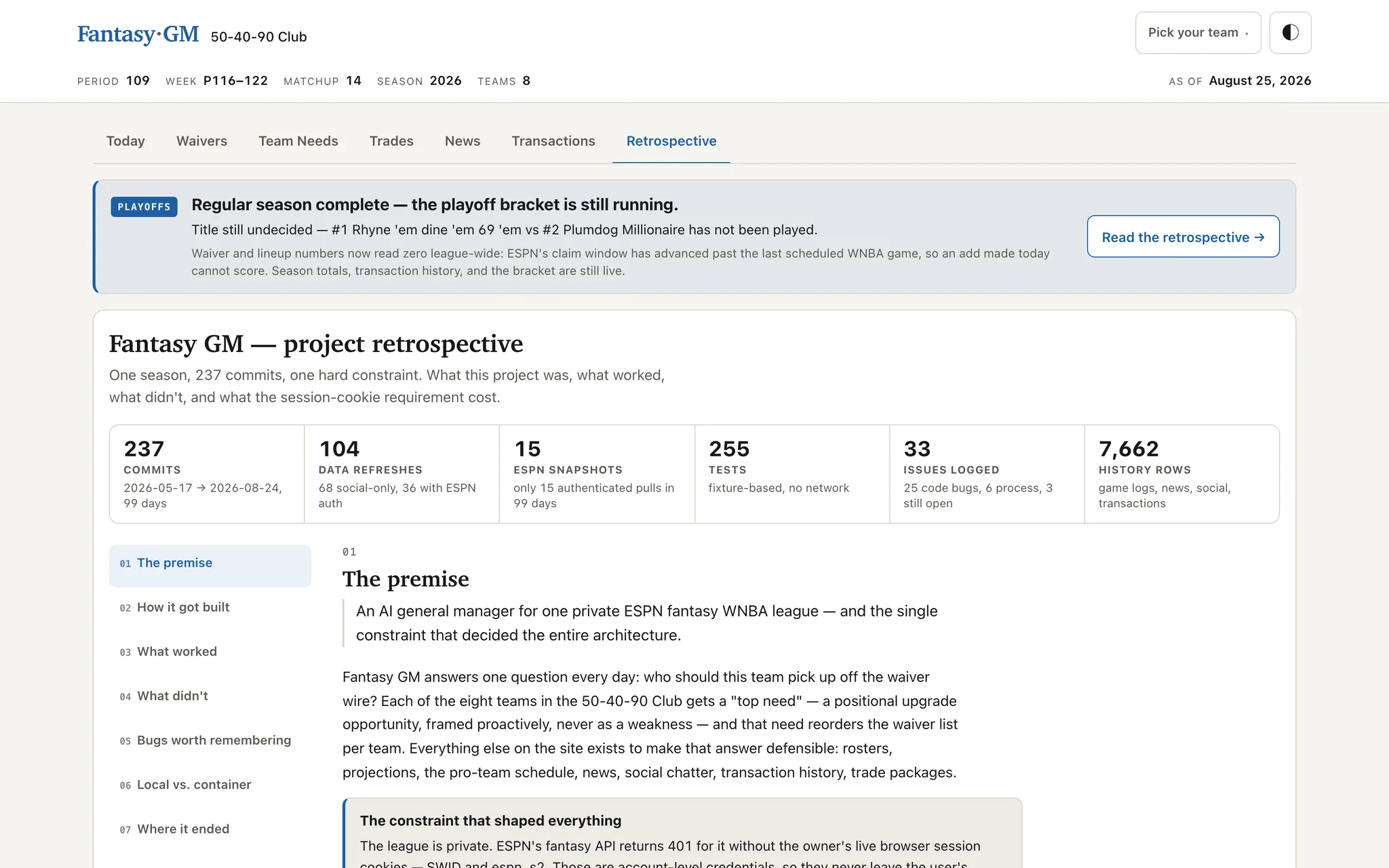
Each view shown on mobile and desktop — tap any image to open the live site.
How It Works
- Private access: League cookies stay in a local environment file; the pipeline publishes derived static data.
- Roster needs: Guard and frontcourt production are compared with league averages.
- Waivers: Available players are evaluated against the schedule and the roster’s missing production.
- History: Add, drop, trade and lineup records preserve stable ESPN team identifiers.
- Retrospective: The season review documents the build and the constraints that shaped it.
Scope reviewed October 2, 2026 · Project documentation. Source data keeps its published dates.