FirstPassRx
Case study · Tech & fun
Look up formulary-preferred drugs for an exact insurance product, state and therapy area. Alternatives, restrictions, verification labels and claim-specific sources accompany each result.
- What
- Look up formulary-preferred drugs for an exact insurance product, state and therapy area. Alternatives, restrictions, verification labels and claim-specific sources accompany each result.
- Stack
- React + Vite SPA, no backend; tests gate every coverage claim on a cited source.
- Status
- LIVE
- Dates
- Scope reviewed October 2, 2026; data dates shown in the app
- Links
- Live site · Source code
Background
Which option does an exact insurance product’s formulary prefer?
FirstPassRx organizes state and therapeutic-area guides around named insurance products. It shows a formulary-preferred option, alternatives and restrictions while keeping coverage evidence distinct from clinical judgment.
The site shows nine states and eight therapy areas. Each guide retains its own plans, sources, verification state and capture dates, so that broader coverage does not imply every cell has been verified.
A Look Inside
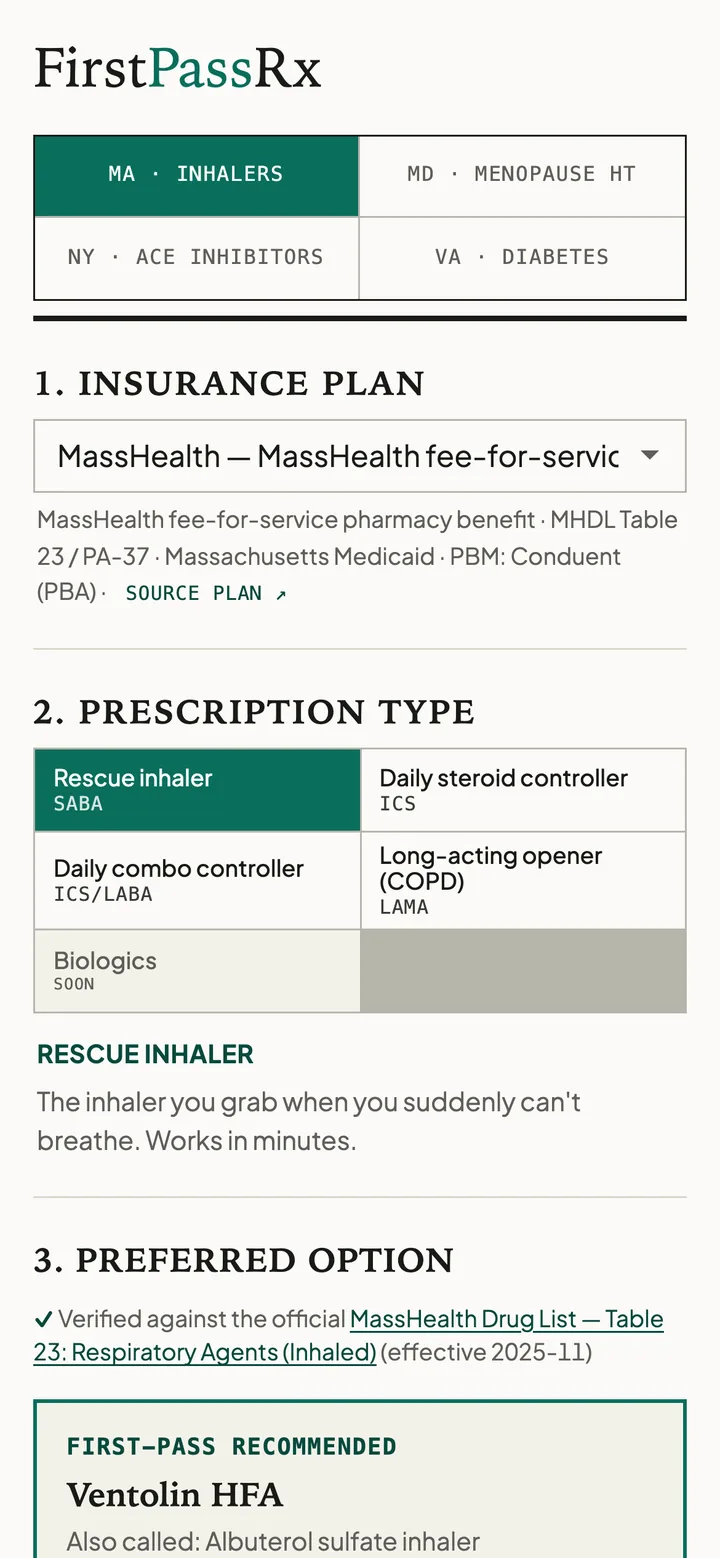
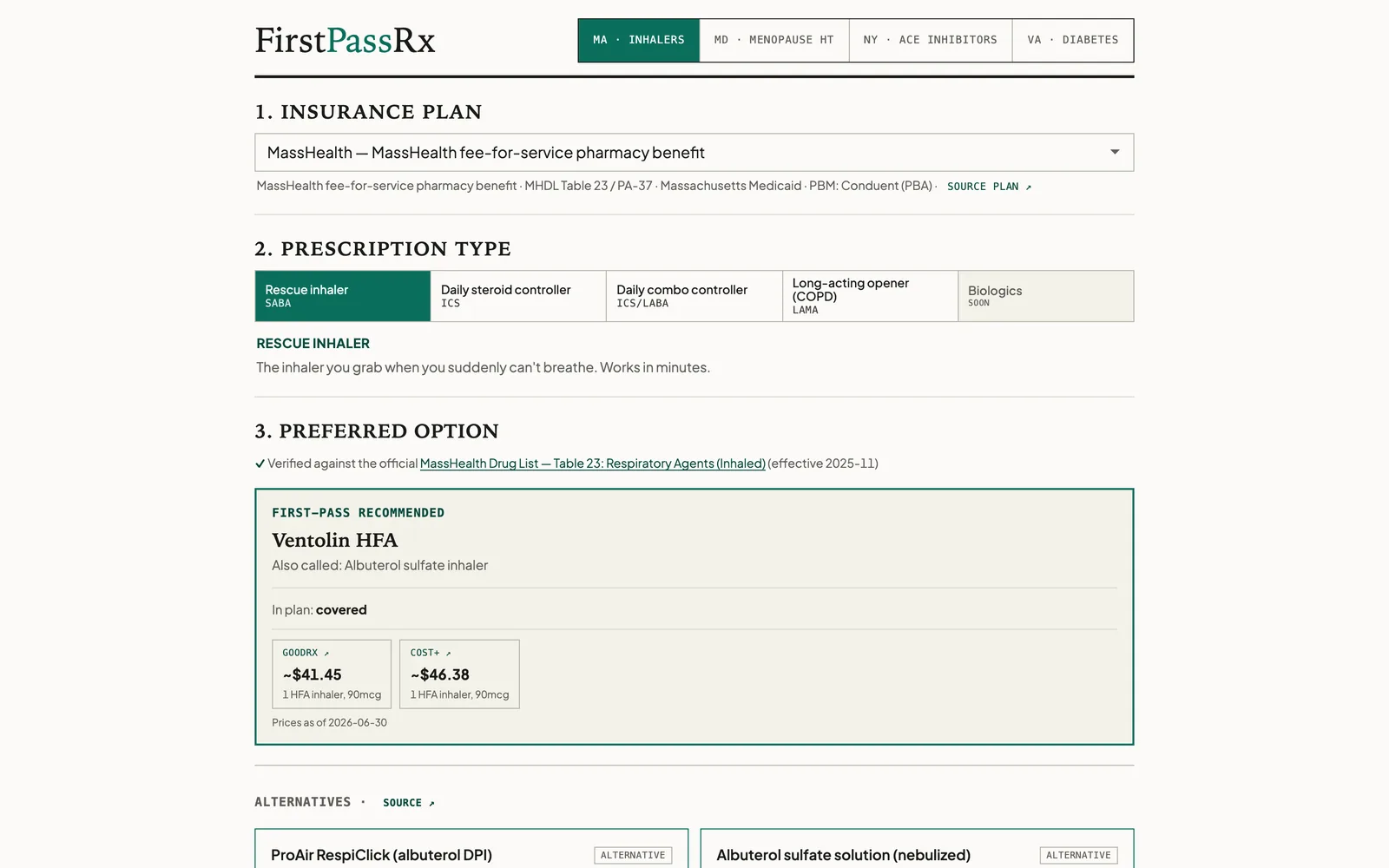
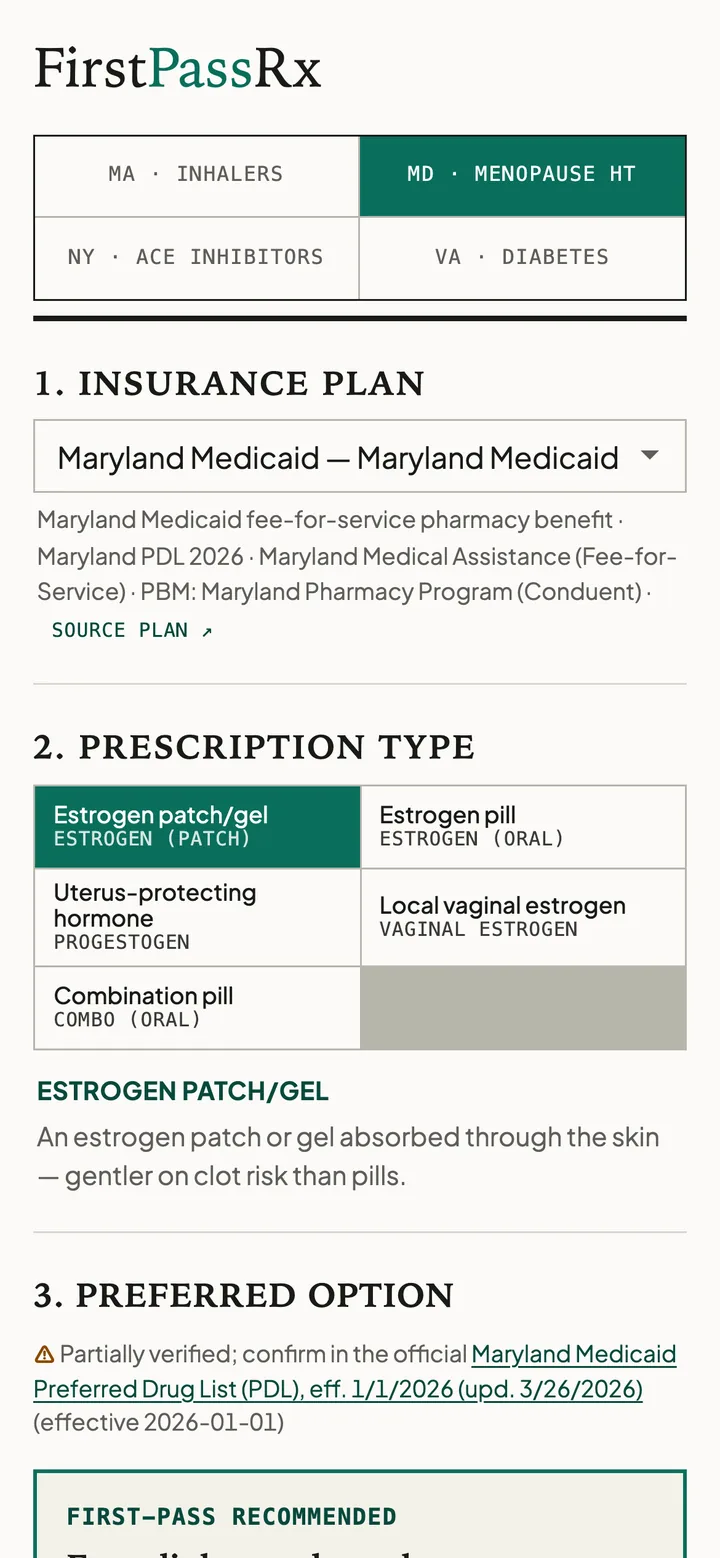
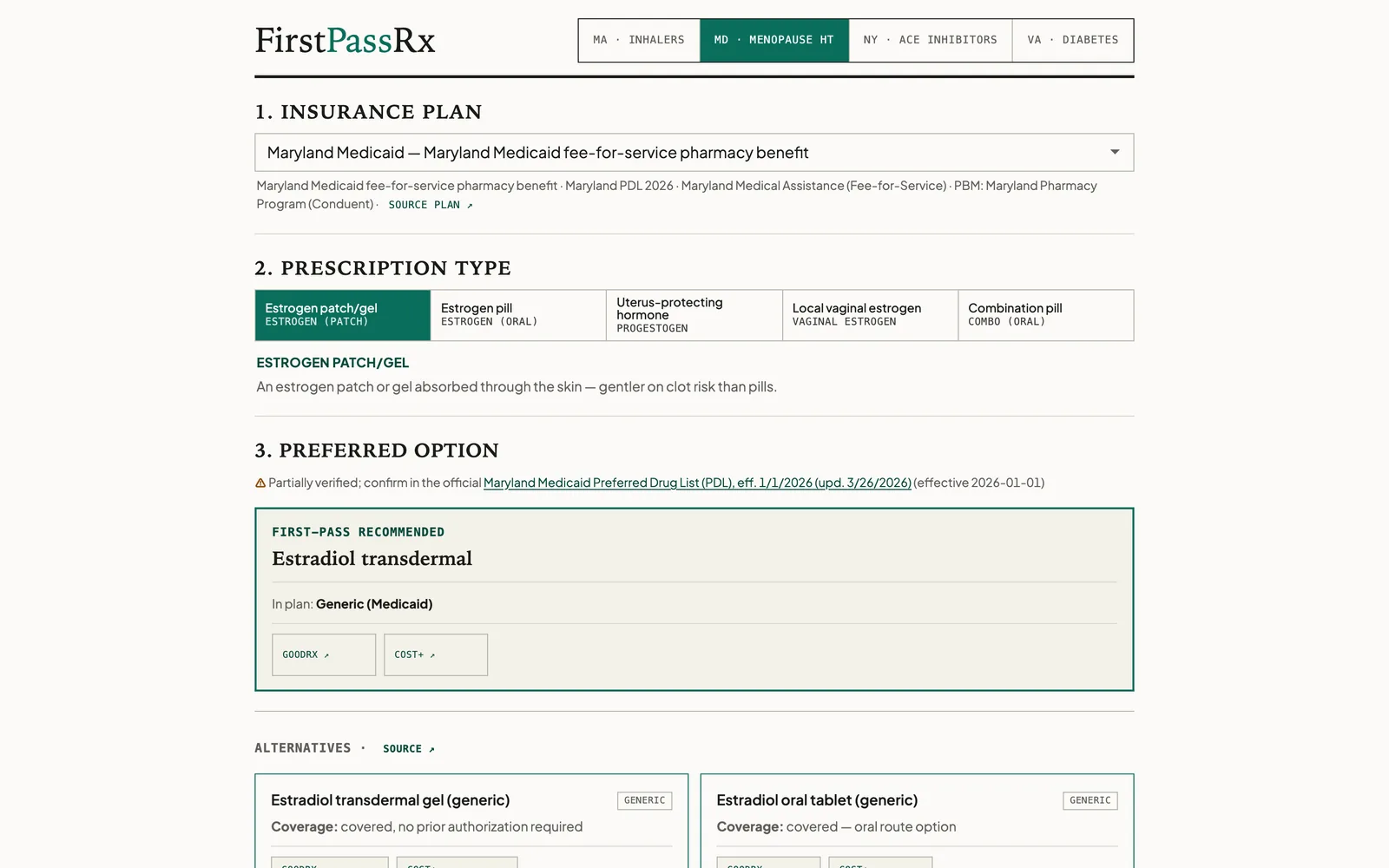
Each view shown on mobile and desktop — tap any image to open the live site.
How It Works
- Plan identity: Product name, market segment and formulary identifier define the coverage key; a carrier name alone is insufficient.
- Claim-specific sources: Coverage and restriction references attach to the claim they support.
- Verification: Verified, partial and example labels remain visible beside the result.
- Workflow: State, area, plan and prescription-class controls lead to the preferred option, alternatives and available appeal drafting.
- Scope: Displayed price and formulary dates remain dated snapshots. Prescribers and plans must confirm clinical choices and current coverage.
Scope reviewed October 2, 2026 · Project documentation. Source data keeps its published dates.