Robotics Industry & Policy Tracker
Case study · Policy
A sourced record of robotics companies, deployments, funding, U.S.–China comparisons, federal and state policy, supply chains and energy, alongside a draft Physical AI executive order.
- What
- A sourced record of robotics companies, deployments, funding, U.S.–China comparisons, federal and state policy, supply chains and energy, alongside a draft Physical AI executive order.
- Stack
- Static HTML, CSS and JavaScript; source-linked JSON records.
- Status
- LIVE
- Dates
- Scope reviewed October 2, 2026; data dates shown in the app
- Links
- Live site · Source code
Background
How do funding, deployment and policy compare across U.S. and Chinese robotics?
Robotics companies publish funding rounds and demonstrations; industrial deployment, supply chains and government programs tell a different part of the story. This tracker keeps those records together with dates and source links.
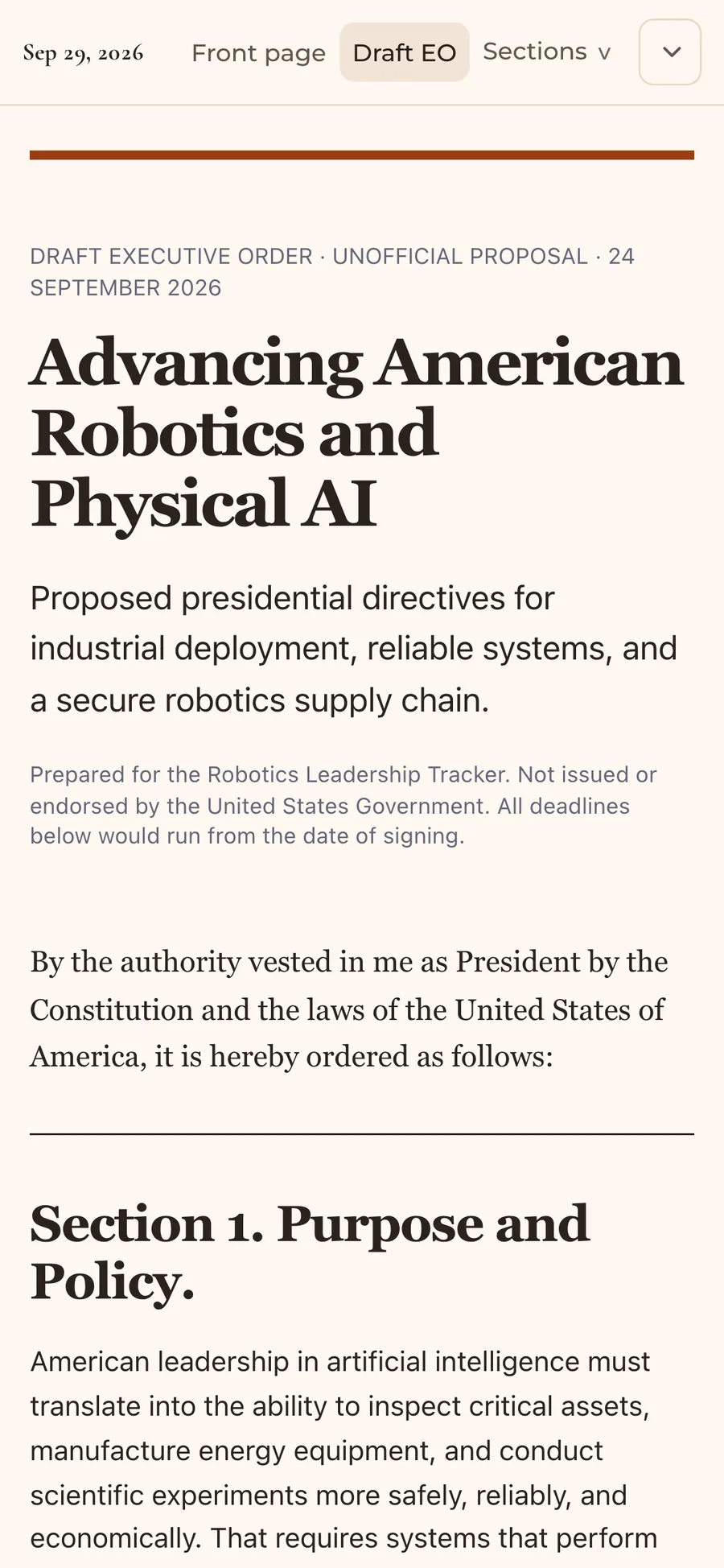
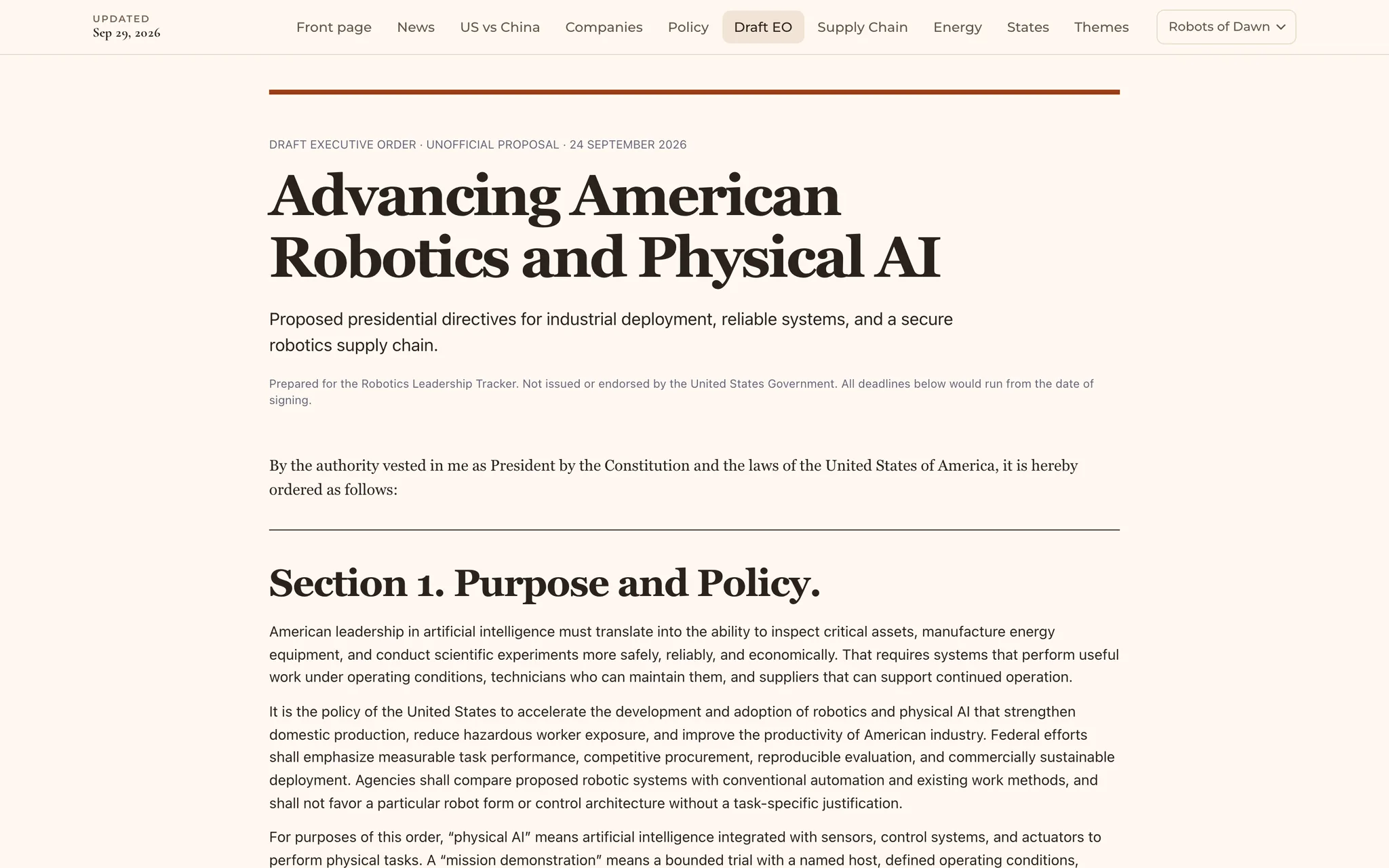
The front page now routes readers through news, the U.S.–China comparison, company records, federal and state policy, supply chains and energy. A draft Physical AI executive order is presented as a proposal.
A Look Inside
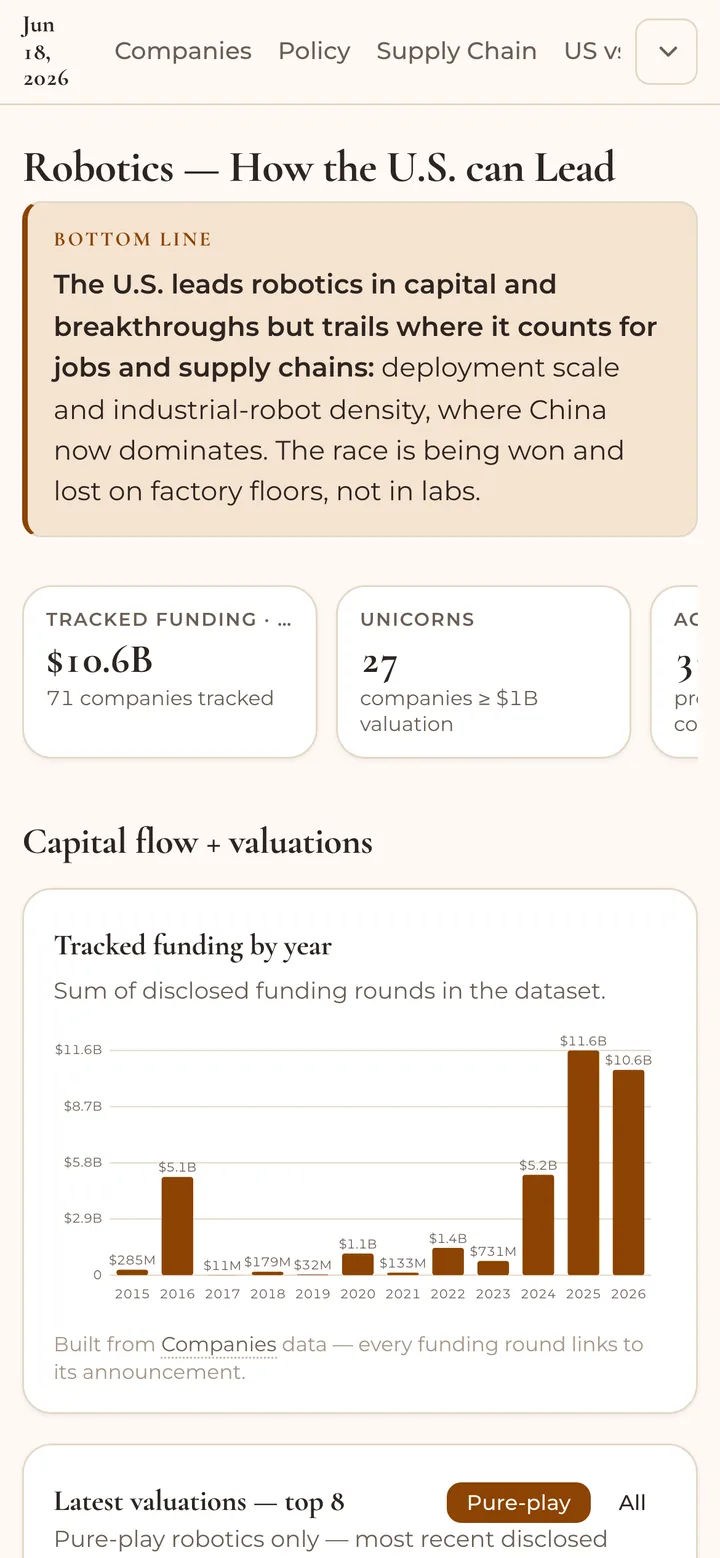
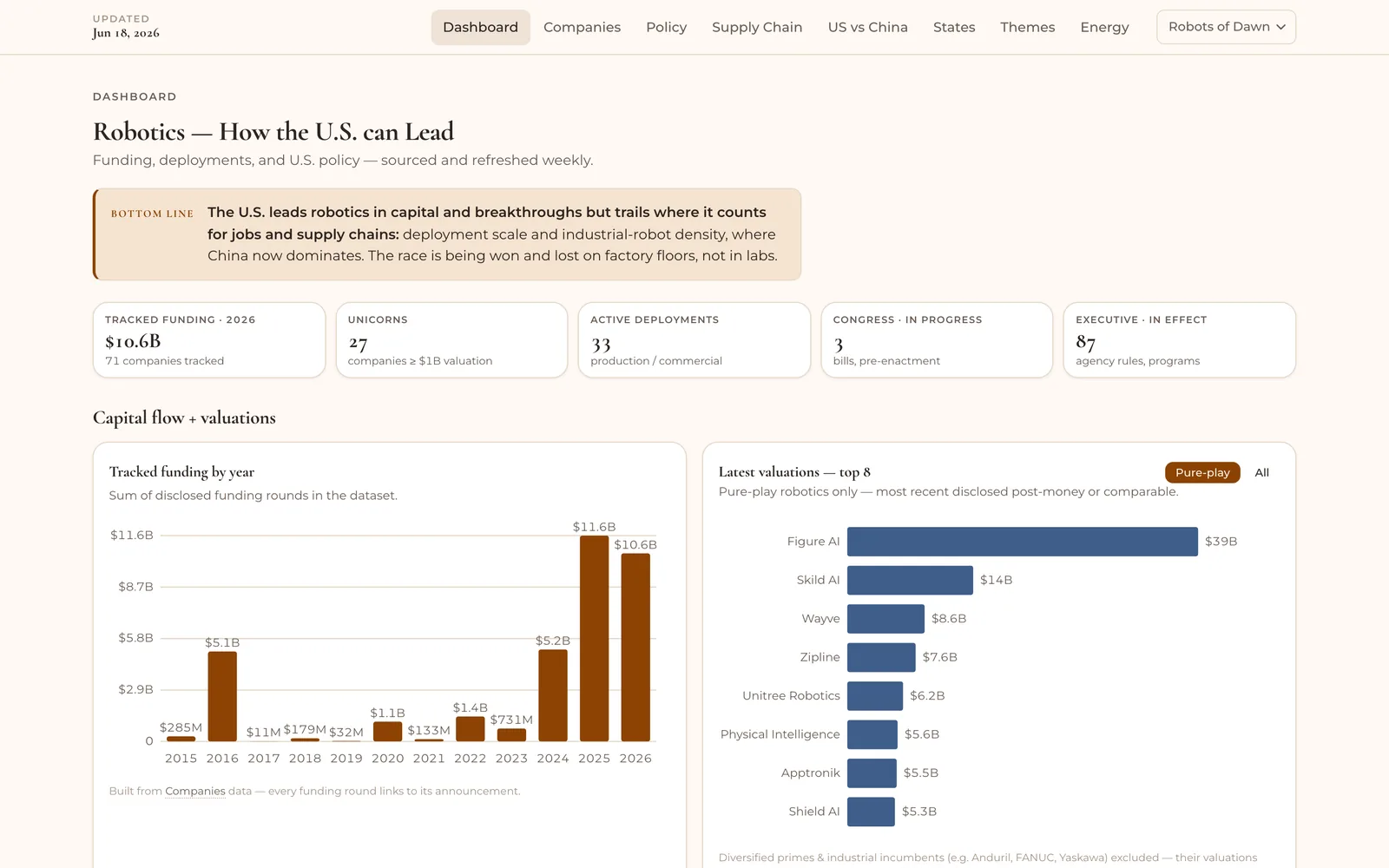
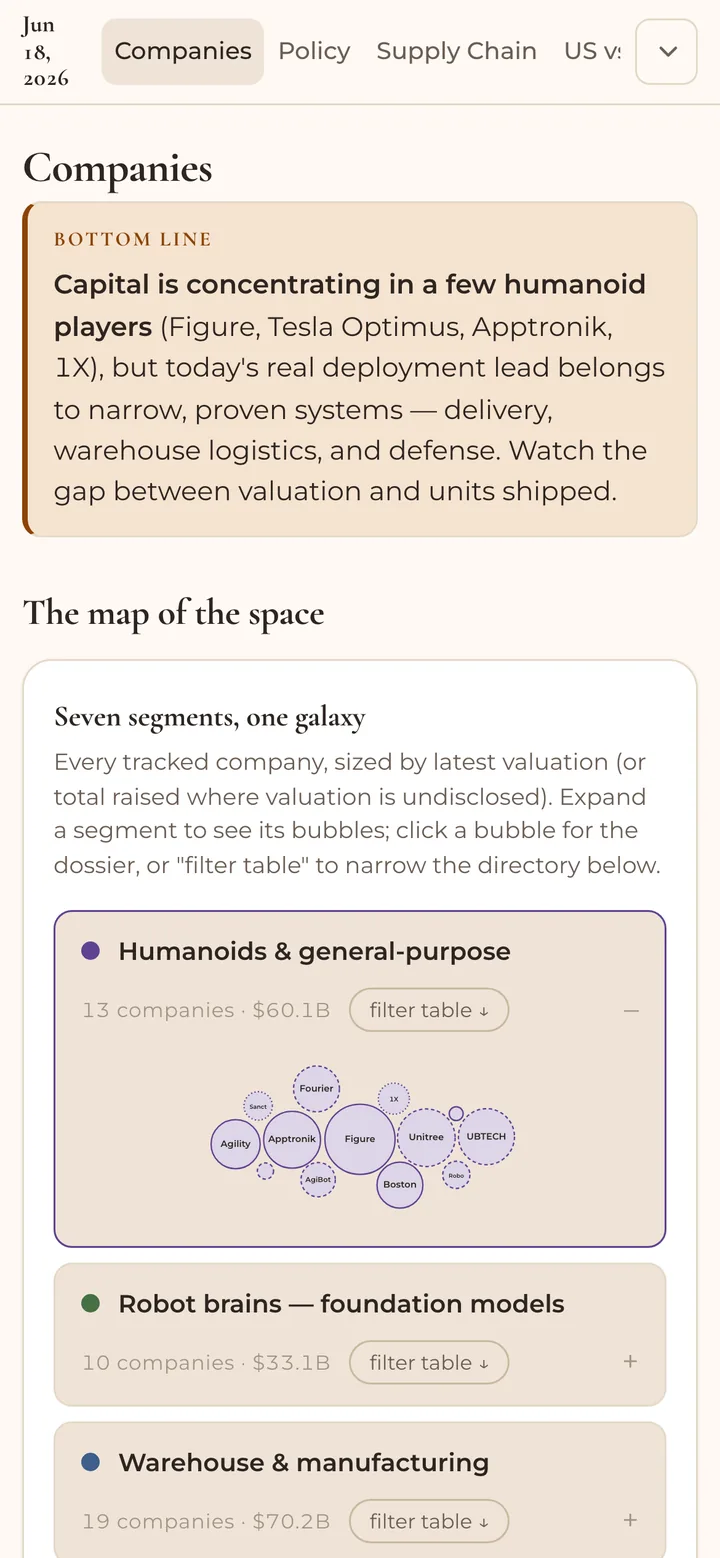
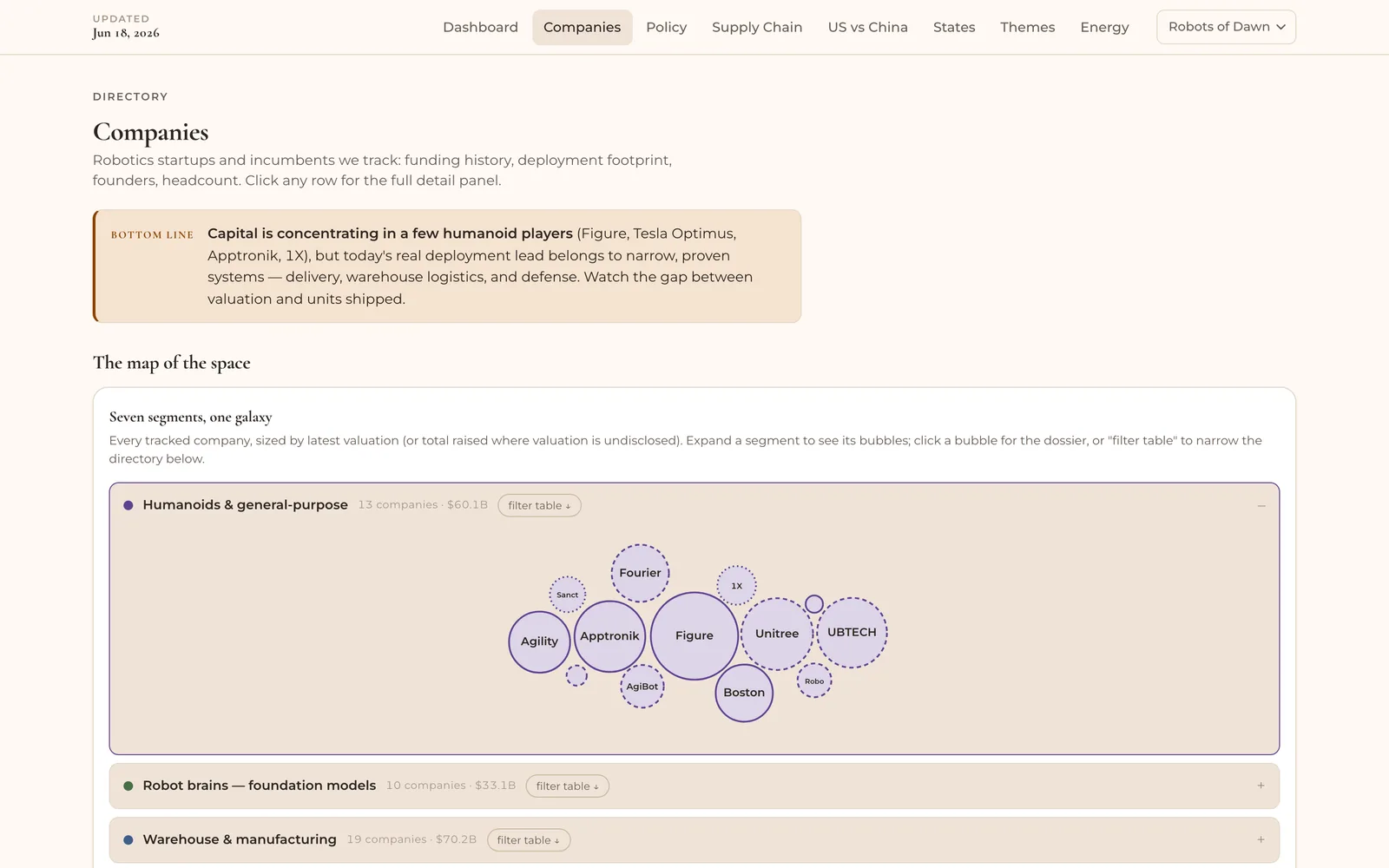
Each view shown on mobile and desktop — tap any image to open the live site.
How It Works
- Company records: Funding, valuations, segments and named deployments appear with their supporting sources.
- Comparisons: Industrial installation trends and financing figures remain distinct measures rather than one national score.
- Policy: Federal bills, agency actions and state programs are recorded with status and source references.
- Draft executive order: The Physical AI proposal sets out deployment decisions and evaluation conditions; it is separate from enacted policy.
- Publishing: Static HTML and JSON keep the site inspectable. Scrapers collect candidate records; curation and validation govern publication.
Scope reviewed October 2, 2026 · Project documentation. Source data keeps its published dates.