September 11th Documents Toolkit
Case study · Policy
Search the City archive, verify a quote against its Bates-numbered page, and track what officials promised to release.
- What
- Independent research tools for New York City's September 11th Document Portal, including a local MCP server and release watchdog.
- Stack
- Python standard library; 10 read-only MCP tools; static evidence site; immutable catalog captures.
- Status
- LIVE
- Dates
- Published September 2026
- Links
- Live site · Source code
Background
What do New York City's own records show about Lower Manhattan's air after September 11, 2001?
The City's new portal contains thousands of Bates-numbered public records, but finding a document, reading the exact page, and checking a quotation still requires several separate steps. Release commitments, investigation milestones, and announced funding also come from different official documents and should not be collapsed into one claim.
The toolkit connects those tasks without re-hosting City records. It was built for New Yorkers, first responders, survivors, and their families. It is independent, not affiliated with the City or 9/11 Health Watch, and provides no legal advice.
A Look Inside
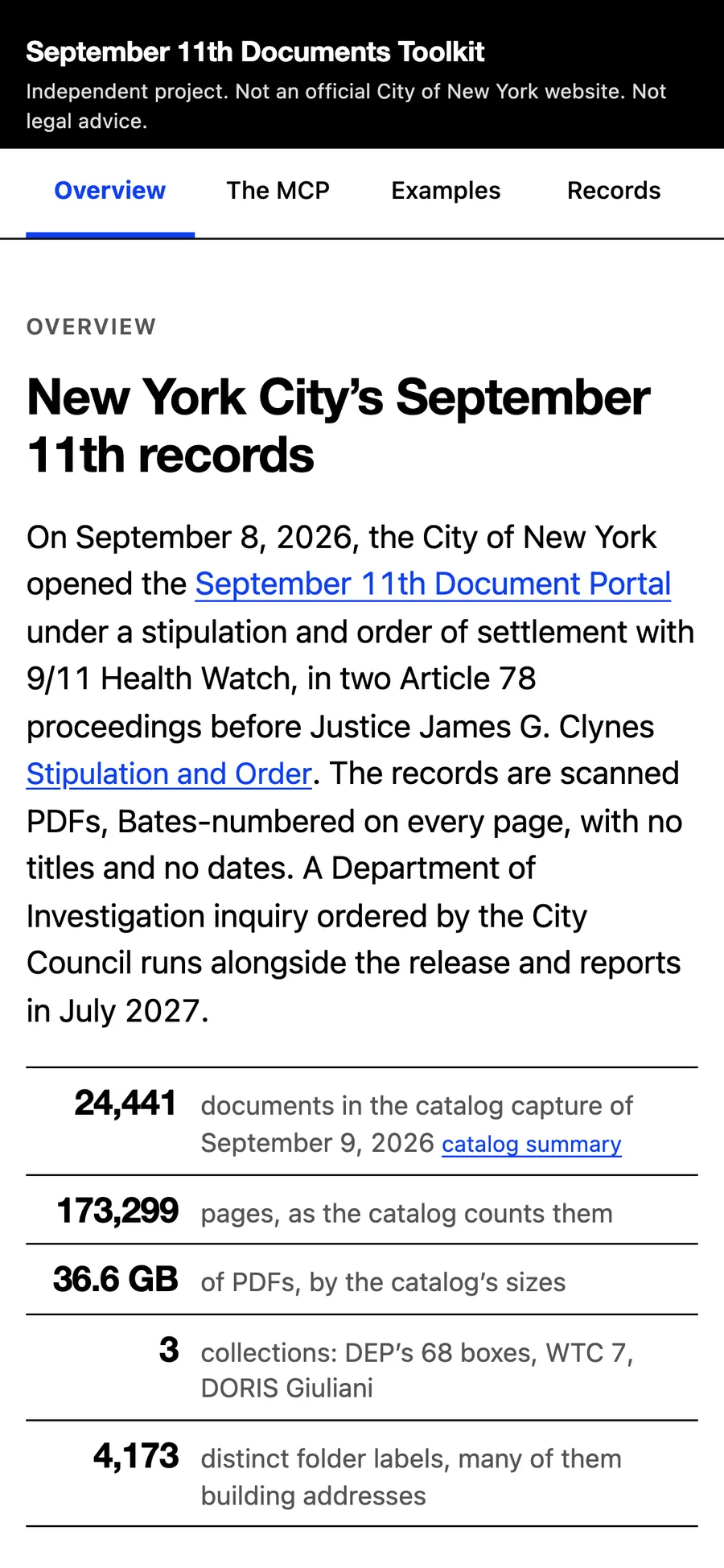
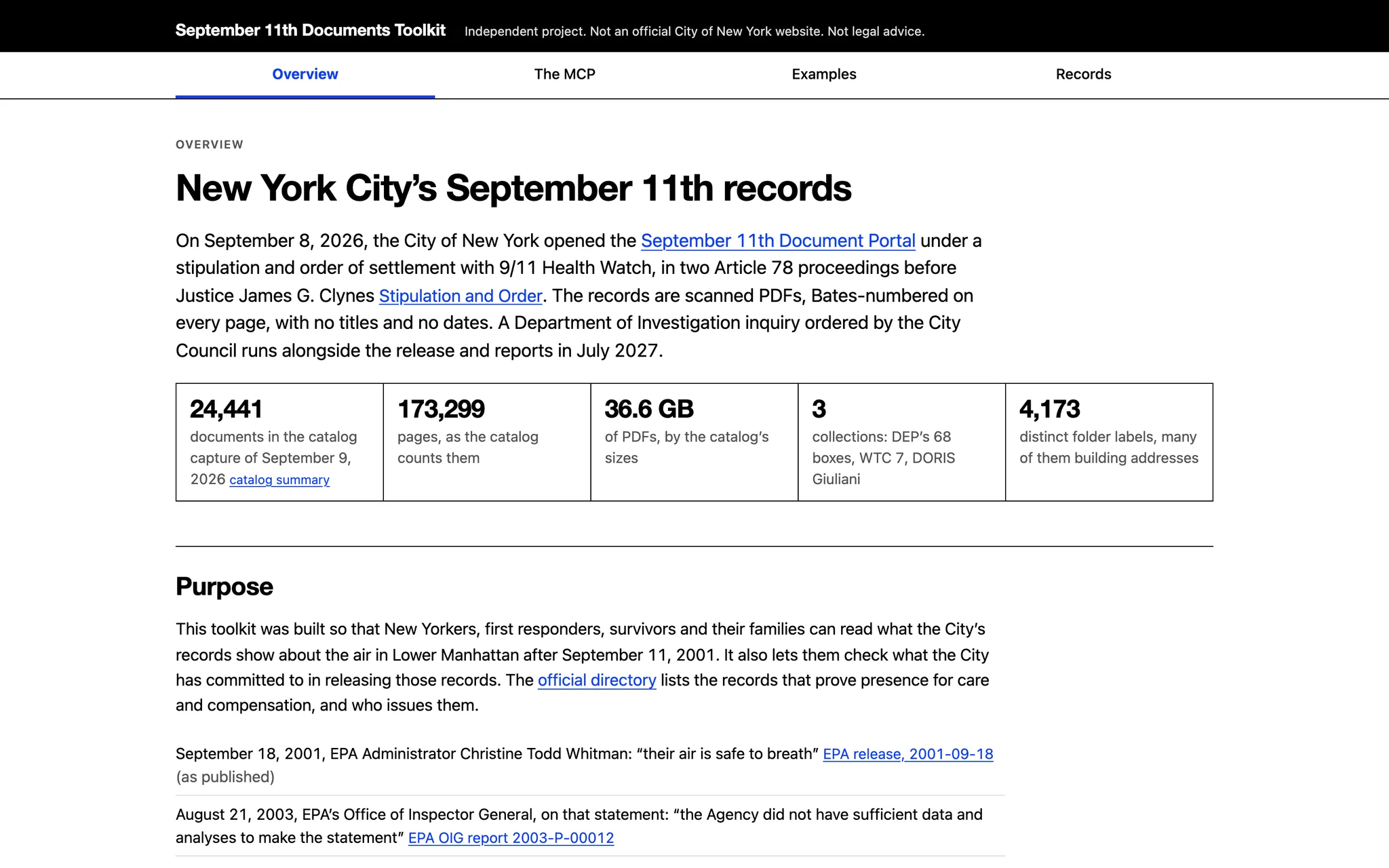
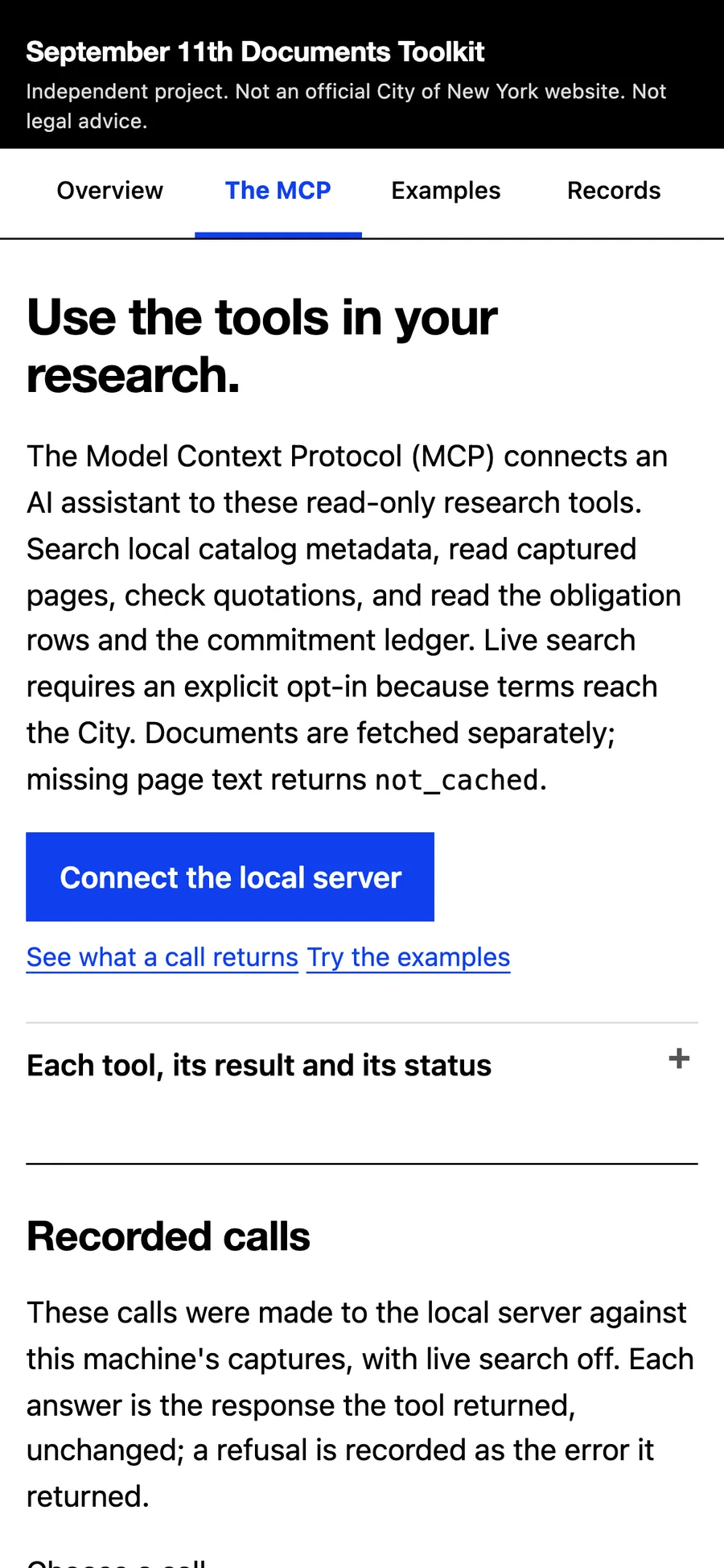
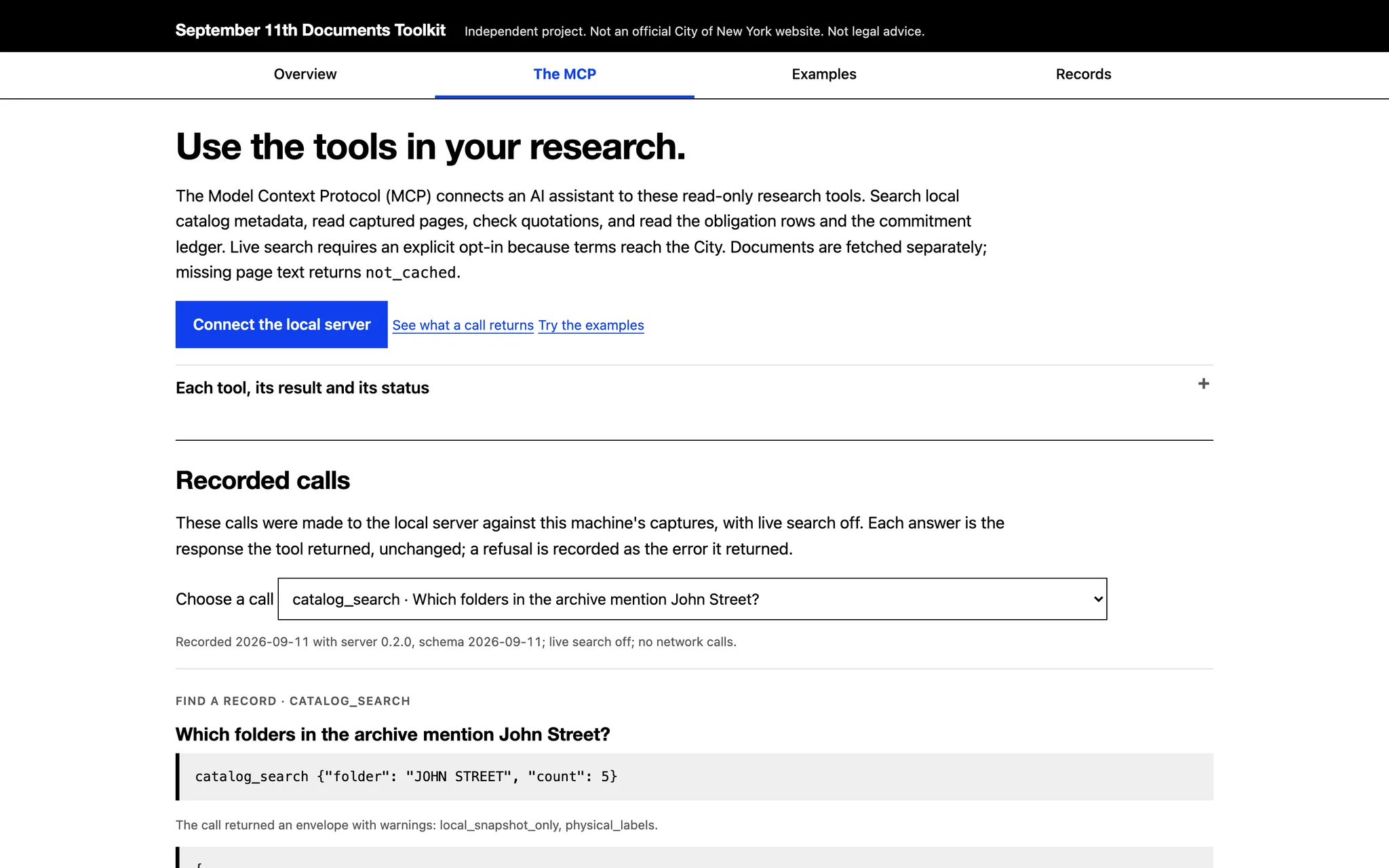
Each view shown on mobile and desktop — tap any image to open the live site.
How It Works
- Catalog search: query an accepted local snapshot instead of sending a sensitive search upstream.
- Page-level evidence: read captured text and verify quotations against a document ID and Bates page.
- Release watchdog: compare immutable catalog captures and report observed additions or changes.
- Claims contract: the build rejects a published quote or number it cannot locate in a captured primary source.
- Bounded publication: only allowlisted documents and reviewed fields may reach public surfaces.
The September 9 catalog export recorded 24,441 documents and 173,299 pages. A fresh clone contains no catalog snapshot; the server says when a document is not cached, and live portal search stays off unless explicitly enabled.